Paineiras Corcovado: Your Gateway to Christ the Redeemer

Discover how Paineiras Corcovado serves as the main gateway to Christ the Redeemer in Rio, with tips on tickets, transport, and more.
Ipanema Beach: Rio de Janeiro’s Timeless Muse

Discover Ipanema Beach, Rio’s iconic muse. From surfing and sunsets to bossa nova history, here’s your ultimate guide to this legendary stretch of sand.
How to Get to Christ the Redeemer in Rio de Janeiro?

Discover the best ways to reach Christ the Redeemer in Rio: by train, van, trail, or tour. Tips on tickets, schedules, and weather for a perfect visit.
Panoramic Helicopter Flight over Christ the Redeemer – 2024

Soar above Rio de Janeiro on a helicopter tour and see Christ the Redeemer up close. Compare top flight operators, prices, and tips for the perfect aerial adventure.
How to Make the Most of Rio de Janeiro in 3 Days

Discover the ultimate 3-day Rio de Janeiro itinerary, covering Christ the Redeemer, Sugarloaf Mountain, Tijuca Forest, and the city’s best beaches.
Christ the Redeemer: Everything You Need to Know Before You Go

Plan your visit to Rio’s Christ the Redeemer with tips on tickets, best times, photo spots, and nearby attractions. Make the most of your trip!
Christ the Redeemer: How to Get There, Tickets, and Hours

Plan your visit to Christ the Redeemer in Rio: ticket prices, how to get there by train or van, and the best times to go for stunning views.
How to Get to Christ the Redeemer: Train, Van, or Hike — A Complete Comparison

🇧🇷 POR | 🇫🇷 FR | 🇺🇸 EN | 🇪🇸 ES There are three ways to reach the top of Christ the Redeemer, each offering a unique experience that suits different types of travelers. Understanding your access options—including time, cost, and what to expect on each route—is key to choosing the one that best fits your profile, budget, and willingness to walk. The monument awaits at the top of Corcovado, accessible via three different routes. | Photo: Sofia Fraire / Pexels Option 1: Corcovado Train — The Classic Tourist Experience The Corcovado train is the most iconic and popular way to reach Christ the Redeemer. This historic railway, in operation since 1884, represents nearly 150 years of Rio’s tourism history. The journey starts at the Cosme Velho station, located in the Cosme Velho neighborhood, just a 5-10 minute drive from downtown Rio, Flamengo, or Laranjeiras. It’s convenient and well-situated for those staying in various parts of the city. Total Time From arrival at the station to your return: roughly 2-3 hours, including a 20-minute train ride each way and about 45 minutes to 1 hour at the top for sightseeing and photos. During peak season, the total time can stretch to 3-4 hours, including the wait before boarding. Cost Between R$ 80 and R$ 100 per person (2026). Children under 5 enter for free. Kids aged 5-12 and seniors over 60 get a 50% discount. Groups of 20 or more can often negotiate prices—worth checking directly with the company if you’re traveling with an organized group. The Experience You ride a railway through the Tijuca Forest, with dense vegetation on both sides, passing three intermediate stations (Sumaré, Caminho da Floresta, and Estação Alto da Vista). Along the way, the scenery gradually changes as you climb. At the top, you arrive at a station practically right next to the monument’s base. The trains have air conditioning, large windows, and modern, comfortable restrooms. Train Pros Unmatched historical and atmospheric experience No walking or physical effort required Window views of the tropical forest along the route Comfortable in any weather (air conditioning) Safe, well-established infrastructure for 140+ years Best for seniors and those with reduced mobility Train Cons More expensive than alternatives (40% more than the van) Long lines during high season (up to 2-hour wait) Fixed, limited schedules (departures every 30 min in peak season) Less flexibility if you want to spend more time at the top Doesn’t let you see the climb itself (forest blocks the view) The monument visible from multiple perspectives as you ascend. | Photo: Cristiano Junior / Pexels Option 2: Van/Bus via Paineiras — The Budget-Friendly Choice The Paineiras do Corcovado company offers the cheapest alternative to reach the top. You depart from the Paineiras neighborhood (central Rio, near Botafogo) and drive up the paved road leading to the monument. This route is mainly used by locals and savvy tourists looking to save money. The Paineiras visitor center is simpler than the train station but gets the job done. Total Time Approximately 2-2.5 hours from start to finish. The van ride itself is only 20-25 minutes. The final time depends more on how long you want to stay at the top than on the transport itself. You save time waiting, as vans depart more frequently. Cost Between R$ 50 and R$ 70 per person (2026). This price is significantly lower than the train. Saving R$ 20-30 per person adds up when traveling with family. For a family of 4, the savings can be up to R$ 120 compared to the train. The Experience You hop into a van or bus (depending on the day’s flow) at the Paineiras visitor center and drive up the paved road to the top. You watch the city grow as you ascend, with panoramic views out the window. The ride is faster and more direct than the train. There’s no forest blocking the view—you see urban landscape, then coastline, and finally the sky and the monument. Van Pros Cheaper than the train (up to 40% savings) Faster route (25 min vs 20 min, but less waiting in line) Higher departure frequency (vans leave as they fill up) Less intense lines than the train Front-facing view of the city during the climb Best for saving both time and money Van Cons Less atmospheric than the historic train Can be cramped in packed vans (up to 20 people) No air conditioning in some older vehicles Less privacy than the train (you share with strangers) The road can be uncomfortable on very hot days A perspective of the monument showing the city in the background. | Photo: Almir reis / Pexels Option 3: The Hike — For Adventurers For those looking to connect with nature and don’t mind a walk, the hike is the most authentic option. It starts in the Tijuca National Park, specifically in the Gávea or Corcovado neighborhoods. It’s not just climbing a mountain—it’s exploring one of the largest urban forests on the planet. This option is for travelers with an adventurous spirit and a willingness to exercise. Total Time The hike is roughly 3-4 hours of walking (8-10 km), plus time for rests and enjoying nature. People in good shape can do it in 2.5 hours round trip. Less experienced hikers or those wanting to savor the trail might take up to 5 hours. Consider this duration before choosing this option. Cost Free for those entering through Tijuca National Park (park entrance fee: just R$ 10-15). Some access points may ask for a voluntary contribution of R$ 5-10 to informal guides. It’s by far the most economical option. The Experience You walk along well-marked paths through pristine tropical forest, passing natural viewpoints like Vista Chinesa and Escada do Escorpião. As you climb, the city view becomes more panoramic. You hear the sounds of the forest, see birds and exotic plants. It’s physical but rewarding—you feel like a true explorer. Trail Variations There are several starting points: from Escada do Escorpião (easier, 45 min to the top),
How to Get Around Rio de Janeiro: A Transportation Guide
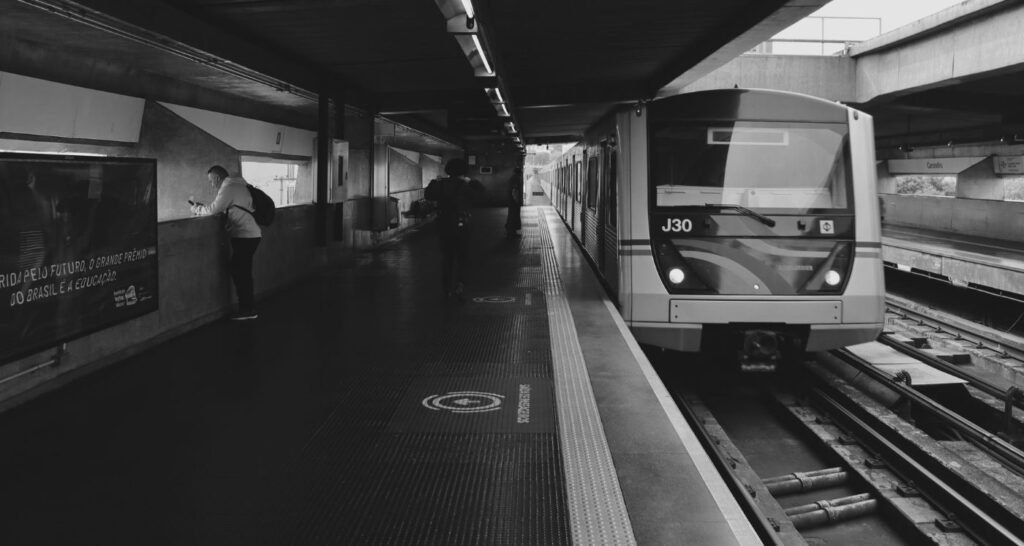
🇧🇷 POR | 🇫🇷 FR | 🇺🇸 EN | 🇪🇸 ES Rio de Janeiro has a more comprehensive public transportation system than most tourists imagine before they arrive. Metro, BRT, VLT, buses, trains, and ferries cover practically the entire city — and by combining two or three modes, you can get from Ipanema to the airport, from Barra to the Historic Center, or from Central do Brasil to Botafogo without needing a car or ride-hailing app for everything. The key is understanding how each mode works, where they intersect, and which situations call for alternatives. This guide covers the city’s transportation options with routes, updated fares for 2026, how to use the RioCard, and practical tips for getting around stress-free. Urban metro station with a train arriving at the platform. | Photo: Kaue Barbier / Pexels Metrô Rio: The Backbone of Transportation in the South Zone Rio’s metro operates three lines that cover the city’s main tourist destinations. The Line 1 (orange) runs from General Osório in Ipanema to Uruguai in the North Zone, passing through Siqueira Campos and Cardeal Arcoverde (the two Copacabana stations), Largo do Machado, Catete, Glória, Central do Brasil, and Maracanã. It’s the line most used by tourists. The Line 2 (green) starts in Botafogo and goes to Pavuna, cutting through São Cristóvão and integrating with Line 1 at Estácio. The Line 4 (yellow) is the newest: it connects General Osório in Ipanema to Jardim Oceânico in Barra da Tijuca. For anyone going from the South Zone to Barra, this line cuts through a stretch that can take 40 minutes in traffic. The metro fare in 2026 is R$ 7.90 per trip, paid with the RioCard card. Tokens or single tickets are no longer available — the card is mandatory. You can buy and top up the RioCard at station ticket booths or authorized points. For those spending just a few days in the city, it’s worth calculating how many trips you’ll take: the balance doesn’t expire if you keep the card. The metro runs from 5 AM to midnight on weekdays and Saturdays, and from 7 AM to midnight on Sundays and holidays. BRT: Express Buses for the West Zone and the Airport The BRT (Bus Rapid Transit) is a network of articulated buses that run on dedicated corridors. In Rio, there are four main corridors in operation: TransOeste: Connects Terminal Alvorada in Barra da Tijuca to Campo Grande, passing through Santa Cruz and Guaratiba. TransCarioca: Connects Galeão International Airport (Tom Jobim) to Terminal Alvorada — this is the most useful line for tourists arriving at Galeão heading to Barra or Recreio. TransOlímpica: Runs the stretch between Alvorada and Deodoro in the North/West Zone. TransBrasil: Runs along Avenida Brasil, from Deodoro to the Novo Rio Bus Station. The BRT fare is R$ 5.00, paid with the RioCard. No cash payments are accepted on board. For those arriving at Galeão heading to Barra da Tijuca, the TransCarioca is the most economical option: board at the airport stop with your RioCard, and in 60 to 80 minutes you’ll be at Alvorada. An Uber from Galeão to Barra costs between R$ 80 and R$ 120 depending on the time — the BRT costs R$ 5.00. Bus interior with passengers — public transit is the most economical option for getting around Rio. | Photo: Kaique Rocha / Pexels VLT: The Best Option in Downtown and the Port Zone The VLT (Light Rail Vehicle) runs through Downtown Rio and the Port Zone, connecting Central do Brasil, Praça Mauá, Santos Dumont Airport, and the Novo Rio Bus Station. For anyone heading to the Museum of Tomorrow, AquaRio, or catching a domestic flight, the VLT is the most practical option within Downtown — modern, punctual, and with good frequency. The fare is R$ 5.00 with the RioCard. Service runs from 5 AM to 11 PM. On weekends, when Downtown is quieter, wait times between vehicles tend to be shorter. Buses: Complete Network, Steeper Learning Curve Rio has over 400 bus lines covering every neighborhood in the city. For tourists, the learning curve is steeper: line numbers aren’t intuitive, and during peak hours, buses can take twice as long as the metro due to traffic. The fare is R$ 5.00 with the RioCard. Some buses still accept cash, but with a surcharge. To use them without hassle, install Moovit before leaving your hotel — it shows lines, stops, and real-time arrival times for Rio de Janeiro. Entering your origin and destination already shows bus, metro, and combined options between the two modes. Buses running along Avenida Nossa Senhora de Copacabana and Avenida Vieira Souto cover the Downtown–Copacabana–Ipanema–Leblon corridor and are widely used by South Zone residents. Within the South Zone, however, the metro is almost always faster than the bus. SuperVia Train: Useful for Maracanã and the North Zone SuperVia is the metropolitan train network that primarily serves the North Zone and the Baixada Fluminense region. For tourists, its main use is getting to Maracanã: the station is two blocks from the stadium and is the safest option on game days when the surrounding area gets very crowded. Fare: R$ 7.60 with the RioCard. It runs from 4 AM to 11 PM on weekdays. Train on a metro station platform — Rio’s metro operates three lines covering the South Zone, Downtown, and Barra da Tijuca. | Photo: Deybson Mallony / Pexels Ferries: The Crossing to Niterói and Paquetá Island CCR’s ferries operate between Praça XV in Downtown Rio and Niterói, Paquetá Island, and other locations in Guanabara Bay. Crossing the bay is itself one of the best experiences in the city — the view of Sugarloaf Mountain, Christ the Redeemer, and the forest-covered hills from the boat deck is unlike any angle on land. Praça XV–Niterói fare: R$ 7.70. Service runs from 6:20 AM to midnight on weekdays. For Paquetá Island, there are specific schedules — check the CCR Barcas website before you go, as times vary on weekends. RioCard: How to Buy and Top Up The RioCard
How Much Does a Trip to Rio de Janeiro Cost: Complete Budget Guide

🇧🇷 POR | 🇫🇷 FR | 🇺🇸 EN | 🇪🇸 ES Planning a trip to Rio de Janeiro gets a whole lot easier when you have a realistic idea of what you’ll spend. Costs vary widely depending on the neighborhood you stay in, your eating style, and which attractions make your itinerary — but it’s possible to enjoy the city on very different budgets, from R$200 to over R$1,000 per day. This guide breaks down the main expense categories of a trip to Rio — accommodation, food, transportation, and activities — with 2026 prices, sample budgets for different traveler profiles, and tips to stretch your money without missing out on what the city does best. Aerial view of Ipanema Beach — Rio de Janeiro offers options for different travel budgets. | Photo: Rogerio Rondon / Pexels Accommodation: From Hostels to Luxury Hotels Accommodation is usually the biggest line item in any Rio trip budget. Prices vary quite a bit depending on the neighborhood and type of lodging. In hostels, a bed in a shared dorm runs from R$ 70 to R$ 130 per night. Private rooms in hostels go for around R$ 180 to R$ 280. Copacabana, Ipanema, and Santa Teresa have the best options in this category — Botafogo has also been growing fast with solid alternatives. Budget hotels and inns (one to two stars) charge from R$ 200 to R$ 380 per night for a double room. You’ll find plenty of options in this range in Copacabana. Quality varies a lot — check recent reviews before booking. Mid-range hotels (three stars) run between R$ 380 and R$ 700 per night. In this range, you’ll find well-equipped rooms, breakfast included, and a good location in the South Zone. Luxury hotels — like the ones right on the beach in Copacabana and Ipanema — start around R$ 800 per night and can go up to R$ 3,000 or more during peak demand periods (New Year’s Eve, Carnival, Rock in Rio). Airbnb is another solid option in Rio. Full apartments in neighborhoods like Flamengo, Catete, or Glória go for R$ 180 to R$ 350 per night and offer more space than hotels in the same price range. For stays longer than a week, the discount is usually significant. A practical tip: avoid high-season dates (especially December and January), when prices jump 40 to 100%. Booking two to three months in advance almost always locks in better rates. Food: From R$ 25 to Fancier Meals Eating well in Rio doesn’t have to be expensive — but it’s also easy to overspend if you always end up at oceanfront restaurants. The prato feito (PF) — a set meal — is the most budget-friendly option in any neighborhood: meat or chicken, rice, beans, farofa, and salad for R$ 25 to R$ 45. Local bars and casual restaurants near the historic downtown, in Catete, and Santa Teresa usually have good options in this range. A lunch or dinner at a mid-range restaurant — with table service, a varied menu, and good ambiance — runs around R$ 60 to R$ 120 per person, not including drinks. Neighborhoods like Botafogo and Flamengo offer great food in this range. In Ipanema and Leblon, the same level of service typically costs R$ 90 to R$ 180. Restaurants with ocean views in Copacabana and Ipanema, or the sky bars at luxury hotels, usually charge R$ 150 to R$ 300 per person with drinks — and it’s worth the occasional splurge for a special night out. For breakfast and snacks, Rio’s bakeries are unbeatable: a grilled bread roll with coffee runs around R$ 8 to R$ 15, and a fresh tropical fruit juice goes for R$ 12 to R$ 20. The Globo cookies sold by beach vendors cost R$ 5 to R$ 10 a bag. Meal at a Brazilian restaurant — Rio’s food scene ranges from budget-friendly set meals to elaborate dinners with ocean views. | Photo: Matheus Alves / Pexels Transportation: Metro, BRT, and Uber Public transportation is efficient for most tourist destinations. With the RioCard, the metro fare is R$ 7.90 per ride, while buses, BRT, and the VLT light rail cost R$ 5.00. For those staying in the South Zone and visiting downtown, a budget of R$ 30 to R$ 50 per day covers public transport well. Uber and 99 fill the gaps where the metro doesn’t reach — Santa Teresa, Cosme Velho, parts of the West Zone. A short ride within the South Zone runs R$ 15 to R$ 30; from the airport to the South Zone, R$ 70 to R$ 130 depending on the time of day. If you’re arriving at Galeão International Airport and heading to Barra da Tijuca, the TransCarioca BRT (R$ 5.00) is the most economical option — though it takes between 60 and 80 minutes. For those arriving at Santos Dumont Airport, the VLT connects directly to downtown for R$ 5.00. Important note: For a detailed breakdown of every transport mode in the city — metro lines, BRT, how to use the RioCard, and safety tips — check out our complete Rio de Janeiro transportation guide. Activities: What’s Free and What Costs Rio has a surprising number of free attractions — meaning you can put together an excellent itinerary without spending almost anything on activities, if you know where to go. Free: Parque Lage (free entry, paid café), Aterro do Flamengo, South Zone beaches (Copacabana, Ipanema, Leblon, Recreio), Selarón Steps, most trails in Tijuca National Park, Quinta da Boa Vista, Royal Portuguese Reading Room, Dona Marta Viewpoint. Paid — budget range (R$ 15 to R$ 60): Botanical Garden (~R$ 30), MAM Rio (~R$ 30), Copacabana Fort (~R$ 20), AquaRio (R$ 60 to R$ 80 with half-price entry), Corcovado train + Christ the Redeemer entry (from R$ 70 by van or ~R$ 120 by train). Paid — mid-range (R$ 89 to R$ 205): Sugarloaf Mountain cable car — Brazilians pay from R$ 89 (Carioca Ticket, for Rio residents) to R$ 160 (Promo Brazil Ticket), and foreign tourists around