Rio de Janeiro is gearing up to welcome 2026 with what has already become the most spectacular New Year’s Eve party on the planet. The celebration along the city’s coastline is a one-of-a-kind spectacle that blends world-class music, cutting-edge technology, and an infectious energy that only Rio can deliver. With free admission and infrastructure designed to host millions, Rio’s New Year’s Eve has cemented its status as one of Brazil’s top tourist attractions.
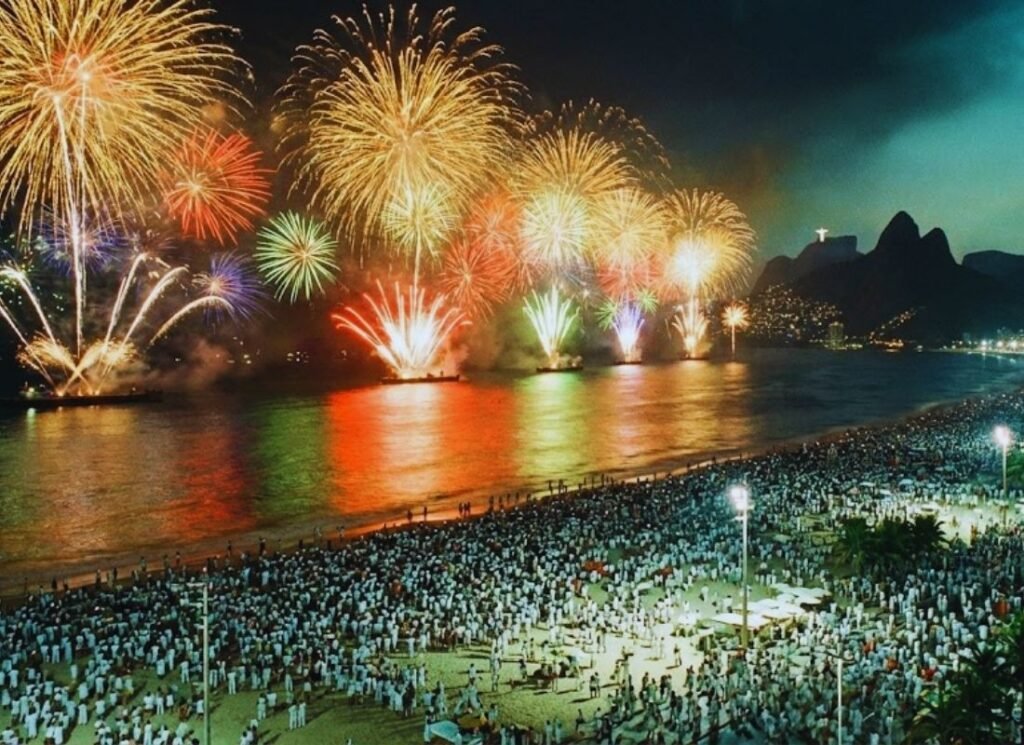
The countdown from 2025 to 2026 promises to exceed all previous expectations. In 2024, over 2.6 million people packed Copacabana Beach alone, while the 13 stages spread across the city drew a total audience of more than 5 million locals and tourists. For the upcoming edition, the Rio City Hall and Riotur have announced robust investments in technology, security, and infrastructure, ensuring the experience is both memorable and safe for everyone.
Dica: Aproveite também para fazer estes passeios no Rio de Janeiro
Cristo Redentor de trem e tour pelo Rio de janeiro. Duração: 4 horas
Passeio grátis pelo centro histórico do Rio e Lapa. Duração: 3 horas
Free tour pelo bairro de Santa Teresa. Duração: 2h 30m
Amanhecer no mirante de Dona Marta + Cristo Redentor Duração: 4 horas
Veja todos os passeios e tranfers no Rio de Janeiro
Copacabana Shines with Unprecedented Tech Innovations
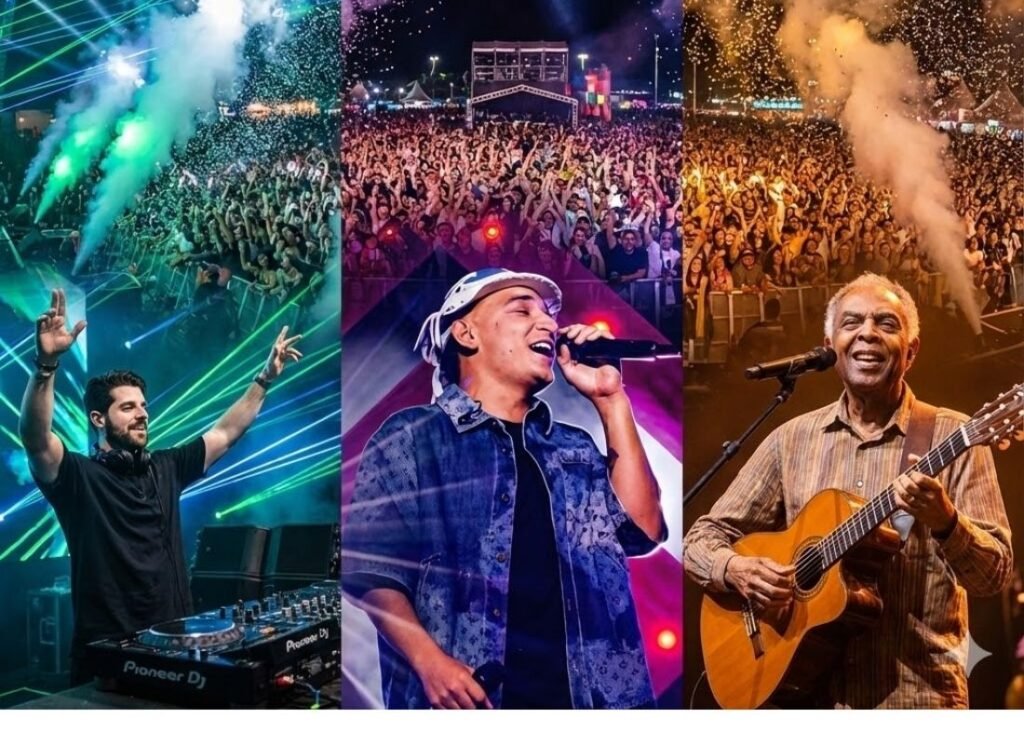
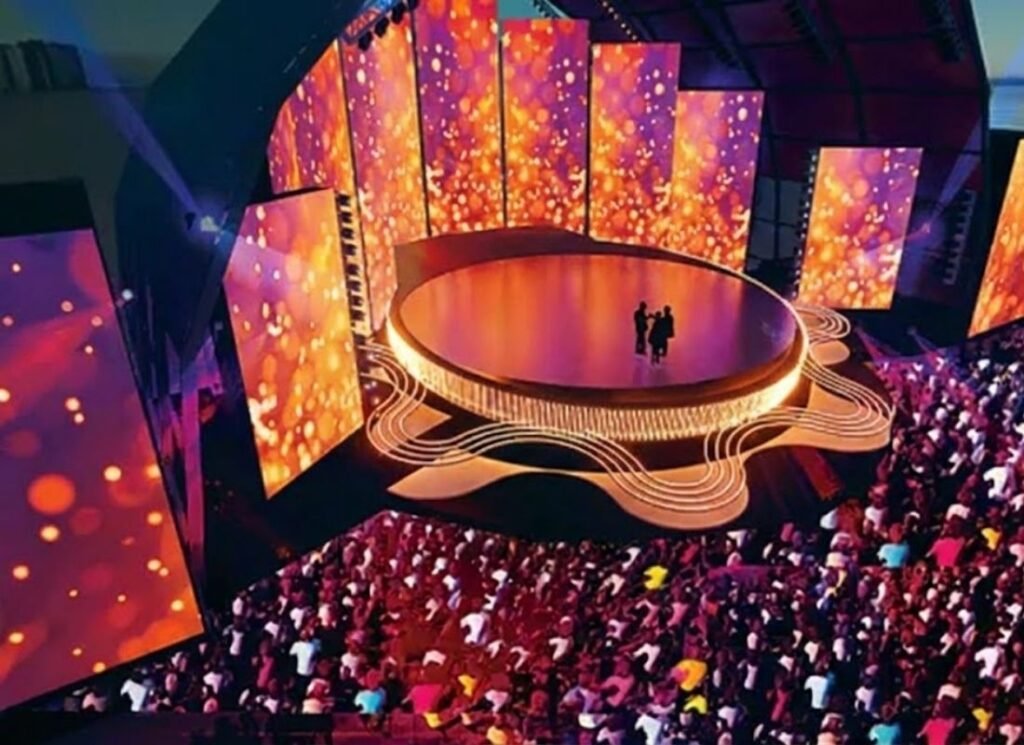
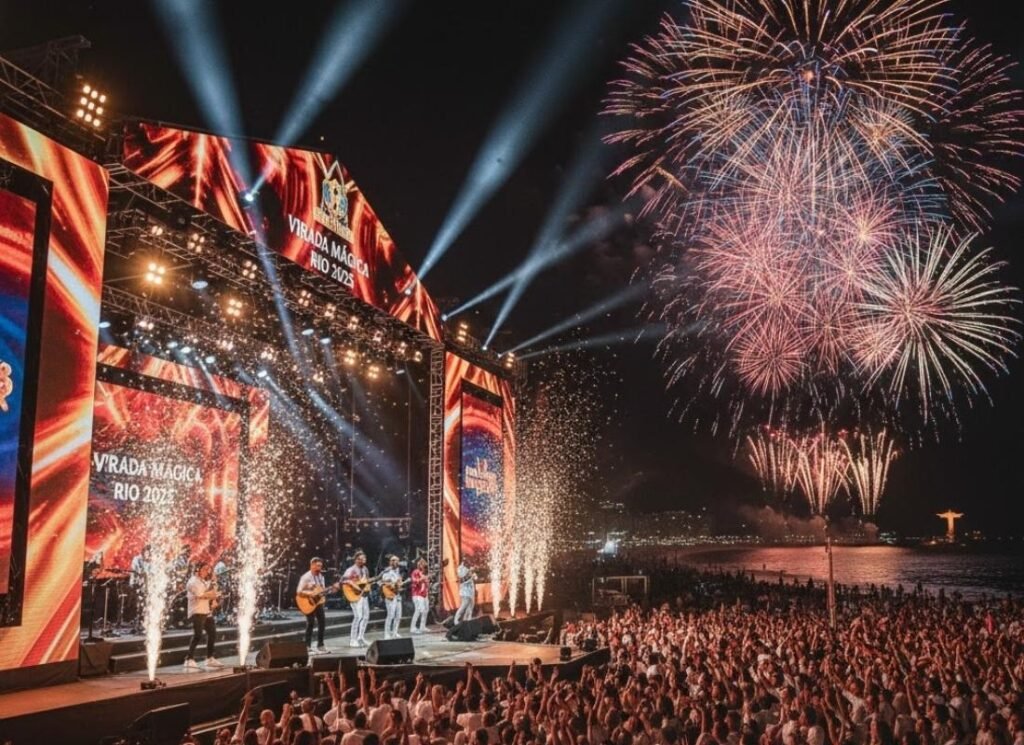
The main stage, located in front of the iconic Copacabana Palace, will feature three major names in Brazilian music. Gilberto Gil kicks off the night at 8 PM with a special show alongside a surprise guest yet to be revealed. Next up, the piseiro phenomenon João Gomes performs his hits for the first time at the world’s biggest New Year’s party. Closing out the main stage lineup, DJ Alok takes over right after the fireworks display, keeping the crowd dancing until sunrise with his electronic music set.
The big tech highlight of 2026 will be the largest drone show ever held in Brazil. A total of 1,100 drones will form unprecedented light displays in the Copacabana sky, perfectly synchronized to the party’s exclusive soundtrack. The drone spectacle will take place immediately after the traditional fireworks show, creating a visual experience like no other for everyone on the beachfront.
The celebration will close following the carioca tradition of honoring the samba school that won the last Carnival. The drum line of Beija-Flor de Nilópolis, the current champions, will wrap up the party with plenty of samba, continuing a ritual that connects the city’s two biggest popular festivals.
| STAGE | LOCATION | ARTIST | TIME | GENRE |
|---|---|---|---|---|
| Rio Stage (Main) | Copacabana – In front of Copacabana Palace | Gilberto Gil + Surprise Guest | 8 PM – 9:45 PM | MPB/Pop |
| Rio Stage (Main) | Copacabana – In front of Copacabana Palace | João Gomes | 10 PM – 11:40 PM | Piseiro |
| Rio Stage (Main) | Copacabana – In front of Copacabana Palace | Alok (DJ) | 12:15 AM onwards | Electronic |
| Rio Stage (Main) | Copacabana – In front of Copacabana Palace | Beija-Flor de Nilópolis (Closing) | After fireworks | Samba |
| Samba Stage | Copacabana – Rua República do Peru | Dudu Nobre | 8 PM | Samba |
| Samba Stage | Copacabana – Rua República do Peru | Samba Circle with Renowned Artists | 10 PM | Samba |
| Leme Stage | Copacabana – Leme neighborhood | Gospel Artists | 7 PM – 12:30 AM | Gospel |
| Flamengo Stage | Flamengo Beach | Sylvinho Blau-Blau | 8:40 PM – 9:40 PM | Pagode/Samba |
| Flamengo Stage | Flamengo Beach | Marvvila | 12:20 AM – 1:40 AM | Samba |
| Flamengo Stage | Flamengo Beach | Grande Rio | 2 AM – 3 AM | Samba |
| Parque Madureira Stage | North Zone – Avenida Edson Passos | Velha Guarda da Portela | 10:30 PM – 11:50 PM | Samba |
| Parque Madureira Stage | North Zone – Avenida Edson Passos | Lukinhas | 12:20 AM – 1:40 AM | Samba |
| Parque Madureira Stage | North Zone – Avenida Edson Passos | Portela | 2:20 AM – 3 AM | Samba |
| Penha Stage | North Zone – Praça Iapi | Tiee | 10:30 PM – 11:50 PM | Pagode |
| Penha Stage | North Zone – Praça Iapi | ImaginaSamba | 12:20 AM – 1:40 AM | Samba |
| Penha Stage | North Zone – Praça Iapi | Salgueiro | 2 AM – 3 AM | Samba |
| Praia de Ramos Stage | North Zone – Praça Roquete Pinto | Lexa | 12:20 AM | Funk/Pop |
| Praia de Ramos Stage | North Zone – Praça Roquete Pinto | Vila Isabel | 2 AM | Samba |
| Ilha do Governador Stage | Ilha do Governador – Praia da Bica | Beija-Flor | 1:50 AM – 2:40 AM | Samba |
| Realengo Stage | West Zone – Parque Susana Naspolinski | Pique Novo | 12:20 AM – 1:40 AM | Samba |
| Realengo Stage | West Zone – Parque Susana Naspolinski | Mocidade Independente de Padre Miguel | 2 AM – 3 AM | Samba |
| Parque Oeste/Inhoaíba Stage | West Zone – Inhoaíba | Clareou | 12:20 AM – 1:40 AM | Samba/Pagode |
| Sepetiba Stage | West Zone – Sepetiba neighborhood | Mangueira | 2 AM – 3 AM | Samba |
| Paquetá Stage | Paquetá – Praia da Moreninha | Unidos da Tijuca | 2 AM – 3 AM | Samba |
Fireworks Display Reaches Historic Scale with 19 Barges
The 2026 fireworks show will feature an unprecedented setup that marks a new chapter in the history of Rio’s New Year’s Eve. For the first time, 19 barges will be positioned along the Copacabana shoreline, nearly double the ten structures traditionally used in recent editions. Riotur has invested approximately R$ 9.5 million in hiring these vessels, tugboats, and support launches, a significant increase from the R$ 5.6 million spent the previous year.
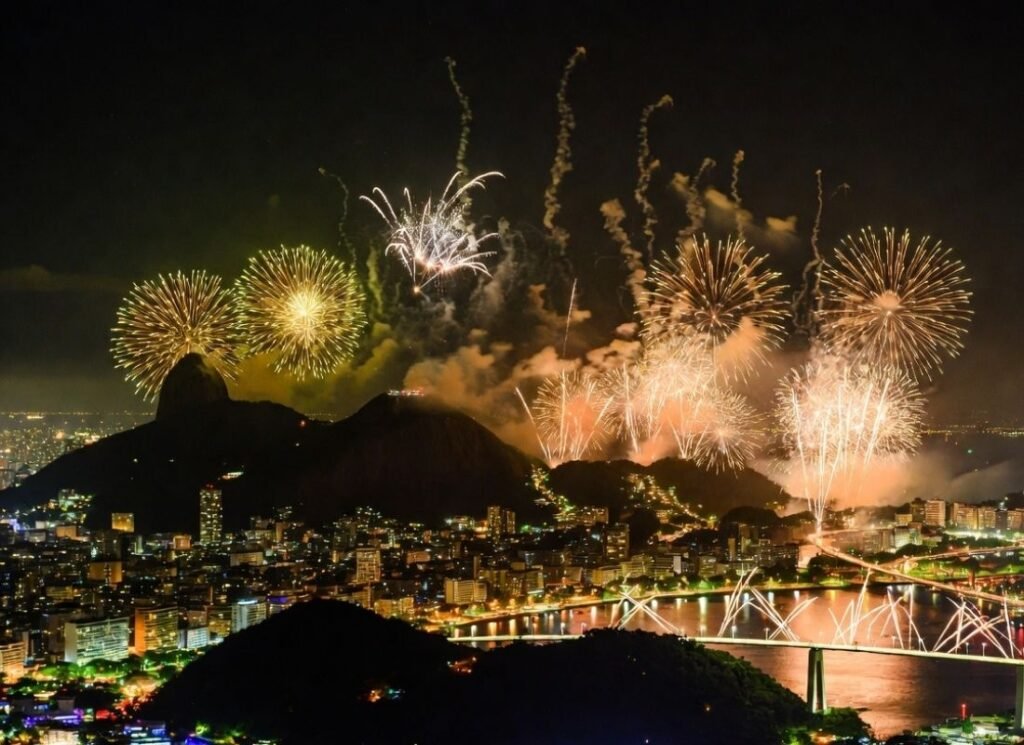
Set designer Abel Gomes, who is responsible for producing both the Christmas tree at Enseada de Botafogo and the Copacabana New Year’s Eve celebration, revealed that the new arrangement of the barges will provide much broader sky coverage during the 12-minute fireworks spectacle. Barges of different sizes will be alternated along the shoreline, ensuring that every point on the beach gets a prime view of the show.
Another major innovation lies in the very manufacturing of the fireworks themselves. The Chinese-made products chosen for this edition generate significantly lower noise than traditional ones, making the spectacle more accessible and comfortable for people sensitive to loud sounds, children, and even pets. The fireworks show will also feature a soundtrack specially composed for the occasion, creating a complete synesthetic experience.
A Stage for Every Taste in Copacabana
In addition to Palco Rio, which hosts the main musical acts, Copacabana will feature two other stages dedicated to specific genres. The Palco Samba, positioned near Rua República do Peru, will bring together big names of the genre that is the city’s musical soul. Acclaimed artists and samba circles will ensure that the most carioca rhythm of all sets the tone for the countdown.
The Palco Leme returns after being absent in previous editions, this time with a focus on gospel music performances. The initiative reflects the organization’s commitment to catering to the diversity of the crowd that attends the party, offering musical options for different profiles and beliefs.
Along the entire Copacabana shoreline, 20 strategically placed sound towers will ensure that the music reaches every point of the beach with quality. During the countdown, these towers will take on another role: they will transform into high-power laser points, creating a light show that pays tribute to samba and carioca culture.
The Party Spreads Across the City
Those who prefer to celebrate the New Year away from the Copacabana crowds will find equally lively options in various Rio neighborhoods. The city government has confirmed the setup of 13 stages across the city, democratizing access to the party and highlighting regions that traditionally were left out of the official program.
In the South Zone, Praia do Flamengo will offer shows and a fireworks display launched from three barges positioned in Guanabara Bay. The location is an excellent alternative for those seeking a slightly more relaxed celebration, without giving up the visual spectacle.
The North Zone will receive four stages at strategic points. Parque Madureira, on Avenida Edson Passos, will feature performances by samba and pagode artists, as well as the presence of traditional samba schools like Portela and Império Serrano. The structure will include medical posts, areas for people with disabilities, and dozens of portable restrooms.
Praia de Ramos, at Praça Roquete Pinto, will host funk shows, with names like Lexa and the Vila Isabel samba school closing out the night. Penha will have its stage set up at Praça Iapi, with pagode acts and a performance by Salgueiro. The traditional Igreja da Penha will also be part of the visual spectacle with its own fireworks display.
Ilha do Governador, at Praia da Bica, and Paquetá, at Praia da Moreninha, round out the options for those seeking a more beachy, family-friendly New Year’s Eve. Both locations will feature samba and pagode performances, along with appearances by traditional samba schools.
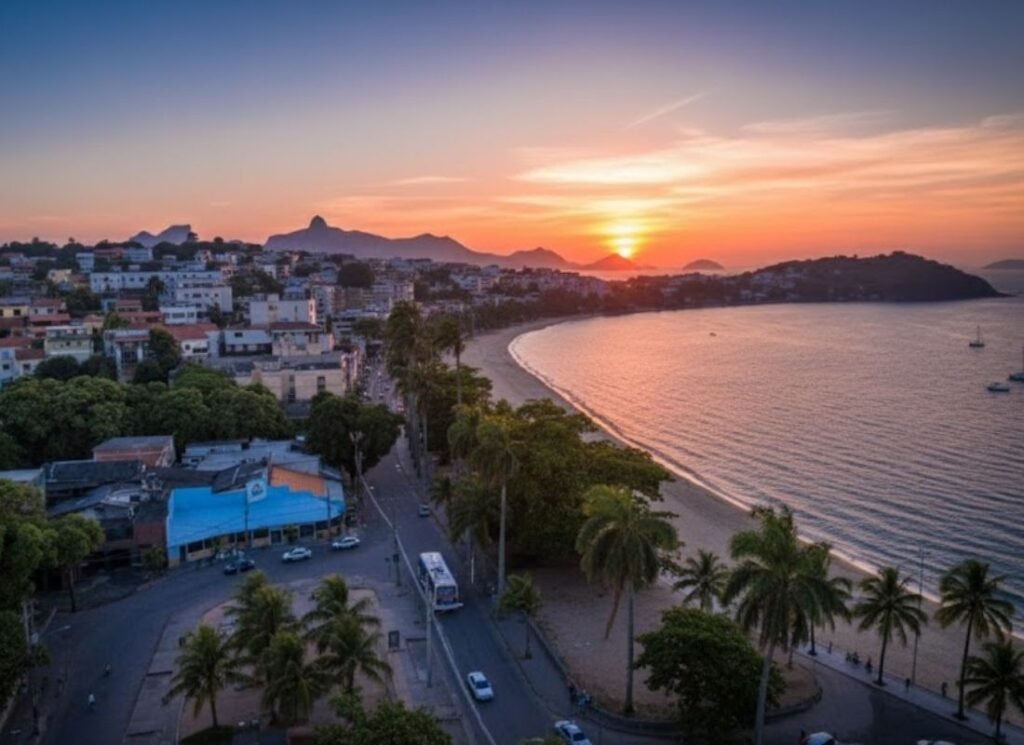
In the West Zone, Parque Oeste in Inhoaíba and Parque Realengo make their debut as New Year’s Eve stages, reflecting the city’s investment in bringing the party to regions further from the tourist center. Sepetiba and Barra de Guaratiba will also have their own celebrations, with shows and fireworks.
In Barra da Tijuca and Recreio dos Bandeirantes, the private sector will organize fireworks displays at ten different points, including hotels and luxury condominiums. Quebra-Mar da Barra, Wyndham Rio Barra, Hilton Barra, and other establishments will host private spectacles that can also be enjoyed by those on the public shoreline.
Getting There and Getting Around Safely
Public transportation is unanimously pointed to as the best option for those spending New Year’s Eve in Copacabana. MetrôRio will implement a special operating schedule, with service starting at 7 PM on December 31st and running until 5 AM on January 1st.
The big news in the transport system will be the exclusive sale of digital tickets with QR Code technology. Tickets can be purchased in advance for five different departure time slots, with prices of approximately R$7.50 for a one-way trip or R$15 for a round trip. Each person can buy up to ten tickets per transaction, but it’s essential to plan ahead, as there will be no on-the-spot ticket sales and availability is limited.
For getting off in Copacabana, the Siqueira Campos station is the most recommended by the concessionaire, as it offers better passenger flow and a lower risk of congestion. The Cardeal Arcoverde station will operate for alighting only between 7 PM and midnight, reopening for boarding after the fireworks. Cantagalo station is also a good alternative for those looking to avoid the biggest crowds.
After midnight, the Cardeal Arcoverde, Siqueira Campos, Cantagalo, General Osório, and Jardim Oceânico stations will remain open exclusively for boarding until 5 AM, making it easier for those on the beachfront to get home.
The bus system will also have a special scheme, with two boarding terminals starting at 10 PM. One at Enseada de Botafogo, near Botafogo Praia Shopping, will serve those heading to the city center, the bus station, and some North Zone neighborhoods. The other terminal will be in Ipanema for lines serving the West Zone.
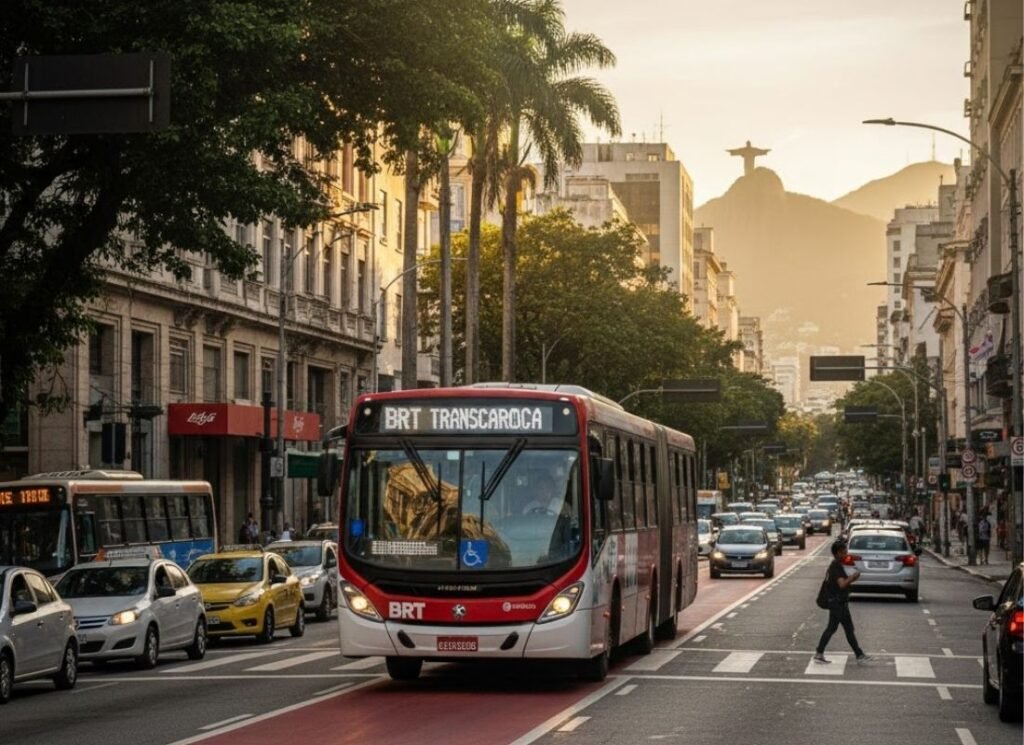
The VLT light rail will operate 24 hours on Line 1, facilitating connections between different modes of transport and travel to the stages spread across the city center and other regions.
Ride-hailing apps like Uber and 99 will operate normally, but experts warn they aren’t the most practical option due to traffic jams and surge pricing that can triple around midnight. The recommendation is to get dropped off in neighboring neighborhoods like Botafogo or Flamengo and continue by metro or on foot to Copacabana.
Enhanced Security with Cutting-Edge Technology
The security plan for New Year’s Eve 2026 will involve approximately 28,000 agents operating across the entire state of Rio de Janeiro. In Copacabana alone, 3,300 military police officers will be deployed, a 12% increase over the previous year.
The neighborhood will have 19 checkpoints on access roads, where mandatory screenings with portable metal detectors will be conducted. Facial recognition technology will be present both on the streets and in subway stations, helping to identify people wanted by the justice system. At the previous New Year’s Eve celebration, the system helped arrest a fugitive during the party.
Bottles, glasses, or cups made of glass, sharp objects, weapons of any kind, and illicit substances will not be allowed on the waterfront. This guidance is essential to prevent accidents and ensure everyone’s safety, especially given the massive concentration of people.
Seventy-eight observation towers will be distributed along the Copacabana waterfront, giving police a wide view of the entire perimeter. Helicopters and drones from the Aerial Group will conduct constant flyovers, with images transmitted in real time to the Integrated Command and Control Center.
The Civil Police will deploy over 3,650 agents, with reinforcements at specialized precincts, including the tourist assistance unit, which will have officers proficient in foreign languages to assist international visitors.
Planning and Essential Tips for Tourists
Choosing the ideal spot on Copacabana Beach depends on each visitor’s profile. For those who want to be close to the live shows and feel all the party’s energy, lifeguard posts 3 and 4 are the best options, as they are near the main stage. Meanwhile, those who prefer a calmer celebration, away from the big crowds but still with a good view of the fireworks, should opt for posts 5 and 6.
Pedra do Arpoador is considered by many to be the best spot to watch the fireworks, offering a privileged view of both Ipanema and Copacabana in a double spectacle. The atmosphere there is festive, with music and dancing, but it requires arriving very early to secure a good spot.
Arriving at the beach around 4 p.m. is the recommendation from those who know the party’s dynamics. This time allows you to pick a good spot on the sand and settle in comfortably before the crowd arrives. Bringing a sarong or towel to sit on, water in plastic bottles, light snacks, and sunscreen are essential items.
The tradition of wearing white on New Year’s Eve has roots in Brazilian culture, especially in the celebrations at Copacabana, associated with offerings to Iemanjá and the search for peace, renewal, and good energy for the year ahead. White gained strength and became popular in the 1970s on the Rio beach, becoming almost mandatory for those who ring in the new year by the sea.
For those heading to the beach, light dresses in fabrics like viscose and cotton are the most recommended, ensuring comfort even with the heat and movement. Flat sandals or flip-flops complete the practical and functional look. Those opting for private parties at hotels and restaurants should invest in more sophisticated fabrics like silk or linen, with elaborate cuts and gold or silver accessories.
Avoid bringing valuables, electronics, and jewelry. Prefer small amounts of change and always keep an eye on your belongings. Despite the strong security setup, the concentration of people requires basic precautions.
Accommodation and Cultural Traditions
Staying in Copacabana or in nearby South Zone neighborhoods like Ipanema, Leblon, Botafogo, or Flamengo is the most practical option for those who want to make the most of the turn of the year without worrying about late-night commutes. Hotel occupancy in Rio’s South Zone typically reaches 85% during New Year’s Eve, making it essential to book months in advance.
For those seeking a more budget-friendly experience, shared hostels and Airbnbs are viable alternatives, allowing you to split costs with other travelers. Those who want comfort and exclusivity can opt for beachfront hotels, which offer special packages with dinner, open bar, and privileged views of the fireworks.
Jumping seven waves right after midnight is one of the most cherished traditions for those spending New Year’s Eve on the beach. This ritual, originating from Umbanda and Candomblé, honors Iemanjá, the queen of the sea, and represents purification and strength to overcome obstacles. With each wave jumped, a wish is made for the year ahead. The number seven holds deep spiritual significance, representing the seven lines of Umbanda and invoking the powers of opening paths.
Another common tradition is throwing white flowers into the sea as an offering and a sign of gratitude. According to custom, the flowers carry away the problems of the past year and return in the form of waves, bringing luck and renewal.
Rio Welcomes the World with Open Arms
Embratur expects a 12% growth in international tourists for the first quarter of 2026, with a highlight on visitors from Canada, Colombia, and Mexico. By September 2025, the city had already received over 1.6 million foreign tourists, mainly from Argentina, Colombia, Italy, Paraguay, and Peru, representing an increase of almost 52% compared to the same period the previous year.
The economic impact of New Year’s Eve goes far beyond the days of the party. Restaurants, bars, beachfront kiosks, local commerce, and the entire tourism chain benefit from the intense movement. The kiosks in Copacabana, for example, start organizing as early as November with special menus, themed decorations, and reserved areas, transforming the waterfront into a gastronomic corridor that boosts local services and enhances the comfort of those who choose to toast by the sea.
For the cariocas, New Year’s Eve represents much more than a party. It’s the consolidation of the identity of a city that constantly reinvents itself, that celebrates diversity, that welcomes millions of people from every corner of the planet, and that offers, completely free of charge, a spectacle that rivals the world’s biggest private celebrations.
The turn from 2025 to 2026 in the Marvelous City promises to be historic. With record investments in technology, Brazil’s largest drone show, nearly double the number of barges for the fireworks display, a diverse musical lineup, and infrastructure designed to serve everyone from international tourists to North Zone residents, Rio de Janeiro reaffirms its position as the world capital of New Year’s Eve. Starting the year with your feet in the sand, surrounded by millions of people dressed in white, jumping waves, and making wishes as the sky lights up with colors and lights, is a transformative experience that only the Rio shoreline can provide.