Lapa changes its face when the sun goes down
By day, Lapa is just another neighborhood in Rio’s downtown: people heading to and from work, street vendors, buses stopping at the curb. But there comes a time, right around when the sky starts to darken, when the area completely transforms. Bar lights flicker on, tables spill onto the sidewalks, and the sound drifting from every doorway blends into a great chorus of cavaquinho, tambourine, and loud conversation.
That contrast is a big part of why Lapa has worn the crown as Rio’s most bohemian hangout for decades. It’s not a place you “discover” — it’s a place you live, preferably on foot, stopping at more than one spot, with no rush to leave. If you’re planning a night out here, it’s worth understanding how the scene works before you head out the door, because Lapa rewards those who arrive with a plan (even if that plan is just “I’ll go and see what happens”).
Dica: Aproveite também para fazer estes passeios no Rio de Janeiro
Cristo Redentor de trem e tour pelo Rio de janeiro. Duração: 4 horas
Passeio grátis pelo centro histórico do Rio e Lapa. Duração: 3 horas
Free tour pelo bairro de Santa Teresa. Duração: 2h 30m
Amanhecer no mirante de Dona Marta + Cristo Redentor Duração: 4 horas
Veja todos os passeios e tranfers no Rio de Janeiro
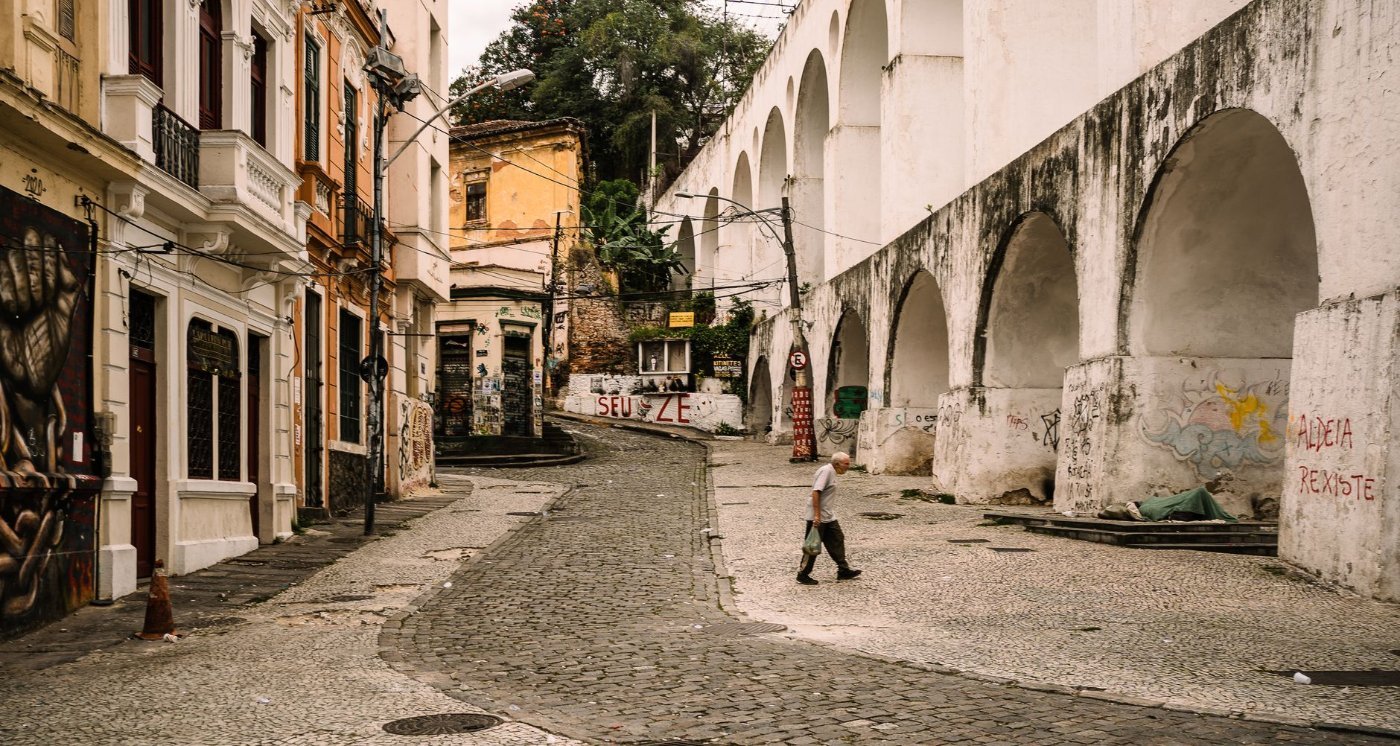
Photo by Roy Serafin | Pexels
The Arcos da Lapa: the postcard that becomes an open-air stage
You can’t talk about Lapa without mentioning the Arcos. The old aqueduct that now carries the Santa Teresa tram tracks is both the neighborhood’s visual boundary and its greatest symbol — a stretch of stone arches that, at night, gets a lighting scheme that highlights every curve of the structure against the dark sky.
It’s under and around the Arcos that much of Lapa’s nightlife happens. On certain days, especially around holidays, the area turns into a massive open-air gathering, with people sitting on the steps, street vendors weaving through the crowd, and impromptu music circles forming on the sidewalks. Even on quieter nights, it’s the kind of scene worth stopping for, looking up, and snapping a photo — preferably without rushing.
If you want to dig deeper into the history of the Arcos — where they came from and why they look the way they do — check out our dedicated guide: Arcos da Lapa. Here, the focus is different: what to do around them after dark.
Where to hear real samba: the traditional music halls and gafieiras
Lapa is, without a doubt, one of Rio’s strongest spots for anyone wanting to hear live samba and choro in venues that have been around for years and helped shape the neighborhood’s music scene. Some remain top references to this day:
- Rio Scenarium — probably the most famous Lapa venue among tourists, it occupies a three-story townhouse decorated with antiques, vintage furniture, and knick-knacks that look like they came straight out of a museum. The lineup mixes samba, choro, and popular rhythms, with a dance floor that’s always packed.
- Carioca da Gema — one of the most traditional, known for samba and choro nearly every day of the week in a smaller, more intimate setting than Scenarium.
- Estrela da Lapa — another heavyweight on the scene, with a spacious hall, great setup for dancing, and shows that tend to draw big crowds, especially on weekends.
Worth noting: practically all of these venues charge a cover (the price varies by day and act), and on weekends there’s usually a line — especially after 10 PM. If you have a specific spot in mind, arriving a bit earlier makes a big difference, both for getting in without a wait and for snagging a good view of the stage.

Photo by Valterci Santos | Pexels
Fundação Progresso: from industrial foundry to live music temple
Just steps from the Arcos, in a building that was once a metal foundry from the early 20th century, now operates one of the city’s most important cultural spaces. Fundição Progresso occupies this historic warehouse and, in addition to the concert hall, houses the National Circus School — which explains the trapezes and rigging you’ll spot around the space.
The programming varies widely: shows by national and international bands, themed parties, electronic music events, and circus performances. It’s worth checking the week’s schedule before you go, since events change frequently and some sell tickets in advance — up-to-date info and dates are always on the official Fundição Progresso website.
Even if you’re not going to a specific show, it’s worth checking out the building’s surroundings — it’s part of the cluster of historic structures that gives Lapa that layered, storied feel within just a few blocks.
Other spots to round out your night in Lapa
Beyond the samba houses and Fundição Progresso, Lapa has a few other addresses that usually make it onto the nighttime itinerary:
- Circo Voador — right next to the Arcos, it’s one of Rio’s most traditional concert venues, with a lineup ranging from rock and MPB to electronic parties. The open-air structure under a tent-like canopy has hosted just about every kind of artist over the decades.
- Sidewalk bars on Rua do Lavradio and around — a great option if you prefer something more casual, with no cover charge, tables on the street, and ambient music spilling out of nearby bars.
- Feira do Lavradio — not exactly a nighttime activity, but worth remembering that on certain Saturdays of the month, Rua do Lavradio hosts an antiques fair during the day that already gets the neighborhood buzzing from the afternoon on.
The good news is that, since everything is concentrated in a relatively small area, it’s totally doable to “do a circuit”: start with dinner or snacks at a sidewalk bar, move on to a samba house, and, depending on the night, cap it off with a show at Fundição Progresso or Circo Voador.
Photo by K | Pexels
Safety: how to enjoy Lapa at night without the headache
As with any busy central area of a big city, a few basic precautions go a long way toward enjoying your night in Lapa with peace of mind:
- Stick to the busy streets — the area around the Arcos, Rua do Lavradio, and the main music venues usually has plenty of people around, which helps. Avoid empty or poorly lit streets, especially late at night.
- Walk in a group whenever possible — besides being safer, it’s more fun. If you’re going solo, set meeting points and keep in touch with someone during the night.
- Watch your phone and valuables — in any big crowd, especially under the Arcos on busy nights, keep your phone, wallet, and camera close and in sight.
- Plan your way back before you leave home — deciding your return route in advance prevents rushed decisions at the end of the night, especially after a few hours on your feet dancing.
None of this is unique to Lapa — these are precautions that apply to any busy nightlife spot in a big city. But precisely because the area is so popular, it’s worth having this mental checklist ready before you head out.
Photo by Homero Esparza Guillen | Pexels
Getting there and back: Uber, taxi, or metro?
Lapa sits in a prime spot in Rio’s downtown, which makes getting there pretty easy. Cinelândia metro station is a short walk from the Arcos area and is a practical option for coming from other parts of the city while the metro is still running.
The problem is the way back. Rio’s metro has limited operating hours — it usually shuts down earlier than the time Lapa really “heats up” — so, especially on Friday and Saturday nights, counting on the metro for your return might not be viable. For those hours, the safest bet is ride-hailing apps (Uber, 99, or similar) or a taxi, and it’s a good idea to agree on a pickup spot in advance to avoid waiting on the street alone.
If you’re staying in the South Zone (Copacabana, Botafogo, Glória), you’ll usually find the ride back quick and relatively cheap by rideshare app, since Lapa isn’t far from those neighborhoods. If you’re staying farther out, it’s worth calculating the time and cost of the ride before deciding how late you’ll stay.
Best day and time to enjoy Lapa
Lapa’s vibe shifts quite a bit depending on the day of the week. Fridays and Saturdays are by far the busiest nights—both at the samba clubs and on the streets around the Arcos, which tend to get packed starting around 9 or 10 PM.
During the week, things are more low-key, which can be a plus if you prefer less crowded spots or want to enjoy the music more comfortably without fighting for space on the dance floor. Keep in mind that each venue’s lineup changes from day to day, so if you have a specific show or artist in mind, it’s best to check the updated schedule directly on the venue’s website or social media before planning your night.
As for timing, Lapa usually “wakes up” after 8 PM and stays lively into the early morning hours, especially on weekends. Arriving between 8 and 9 PM is a good sweet spot: you’ll have time to grab dinner, pick a venue, and still catch the first sets of the night without hitting the peak crowd.
Frequently asked questions about Lapa at night
Is Lapa safe at night?
Lapa is one of the busiest neighborhoods in Rio at night, which in itself helps with safety—empty streets are usually the biggest risk in any city. Still, it’s worth following the basic precautions you’d take in any busy urban area: avoid poorly lit streets, keep an eye on your valuables, and arrange your ride back in advance.
What’s the best day to go to Lapa?
Fridays and Saturdays are the busiest nights, with more show options and livelier streets. If you prefer something more relaxed, a weekday is a good call, when the vibe feels more like a neighborhood bar than a packed hotspot.
Do you have to pay to get into Lapa’s samba clubs?
Yes, most of Lapa’s music venues charge a cover, with prices varying by day and act. Street-side bars, in general, don’t charge admission—you just pay for what you order at your table.
Can you take the metro to Lapa?
To get there, yes—Cinelândia station is a short walk from the Arcos area. For the late-night return, especially on weekends, the metro may already be closed, so it’s best to rely on rideshare apps or taxis.
Is it worth going to Lapa alone?
It’s doable, but it’s better to go with company, especially to samba clubs and shows, where the group vibe is often part of the experience. If you do go solo, stick to busier spots and arrange your ride back in advance.
Is the night out worth it?
Lapa is one of those places that captures the most spontaneous side of Rio: history, music, architecture, and people in the streets, all mixed together in an area you can cover entirely on foot. Between the illuminated Arcos, the sound spilling out of the samba clubs, and the industrial backdrop of Fundição Progresso, you can put together a night out that completely changes how you see Rio’s downtown.
If you’re planning a trip and want to include a “true carioca night” on your itinerary, Lapa is a great starting point—just don’t forget to arrange your ride back before you head out, because once the music starts, it’s easy to lose track of time.