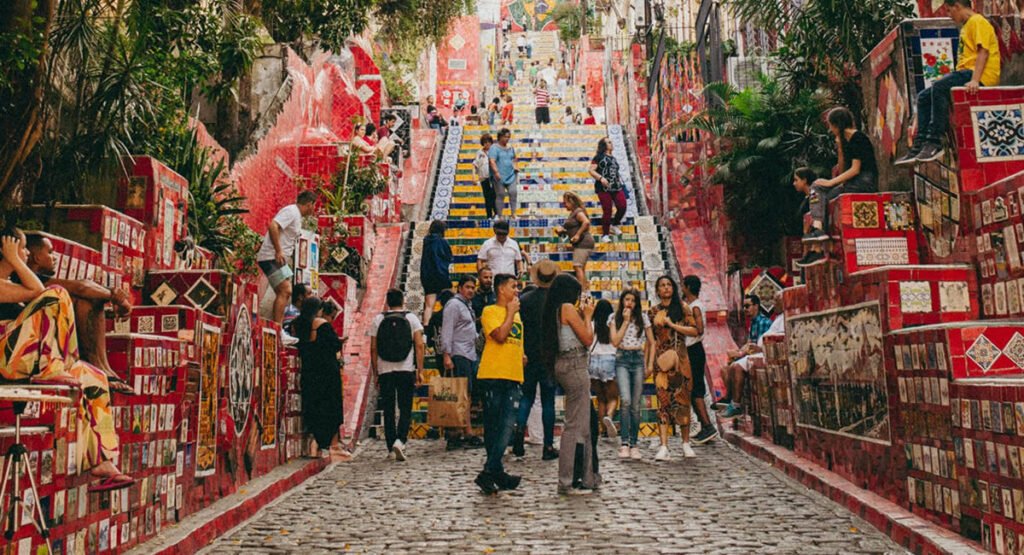
Selarón Steps, located between the Lapa and Santa Teresa neighborhoods, is one of Rio de Janeiro’s most famous attractions. This vibrant mosaic, featuring over 2,000 tiles from around 120 countries, was created by Chilean artist Jorge Selarón, who began working on the staircase in 1990. The work has become a symbol of urban renewal and is frequently visited by tourists and locals alike, drawing people who seek not only beauty but also a piece of Rio’s history.
Tip: Check out the Sugarloaf Cable Car and the Tijuca National Park.
Dica: Aproveite também para fazer estes passeios no Rio de Janeiro
Cristo Redentor de trem e tour pelo Rio de janeiro. Duração: 4 horas
Passeio grátis pelo centro histórico do Rio e Lapa. Duração: 3 horas
Free tour pelo bairro de Santa Teresa. Duração: 2h 30m
Amanhecer no mirante de Dona Marta + Cristo Redentor Duração: 4 horas
Veja todos os passeios e tranfers no Rio de Janeiro
The fame of the Selarón Steps is due to its impressive colorful aesthetic and the deep meaning it carries. Selarón considered it a “tribute to the Brazilian people,” reflecting his love for Brazil and its culture. The staircase is a perfect example of public art that democratizes access to culture, becoming a space where everyone can interact with and appreciate creativity.
How to Get to Selarón Steps?
If you’re planning to visit Selarón Steps, the good news is that it’s easy to get to. Located on Rua Joaquim Silva, between Lapa and Santa Teresa, the staircase can be reached on foot from the famous Arcos da Lapa. For those who prefer public transport, the nearest metro stations are Cinelândia and Glória.
Getting there early is key to making the most of it. The site is free and open to the public every day, but it tends to get busy in the afternoon. Additionally, sunrise and sunset offer incredible lighting for photos, highlighting the vibrant colors of the tiles even more.
Jorge Selarón: The Genius Behind the Work
Jorge Selarón wasn’t just an artist; he was an eccentric and passionate figure who saw art as a form of expression and resistance. His relationship with Brazil was one of pure love, something that shines through in every detail of the staircase. He used to say the work would never be finished, as there would always be a new tile, a new idea, a new contribution.
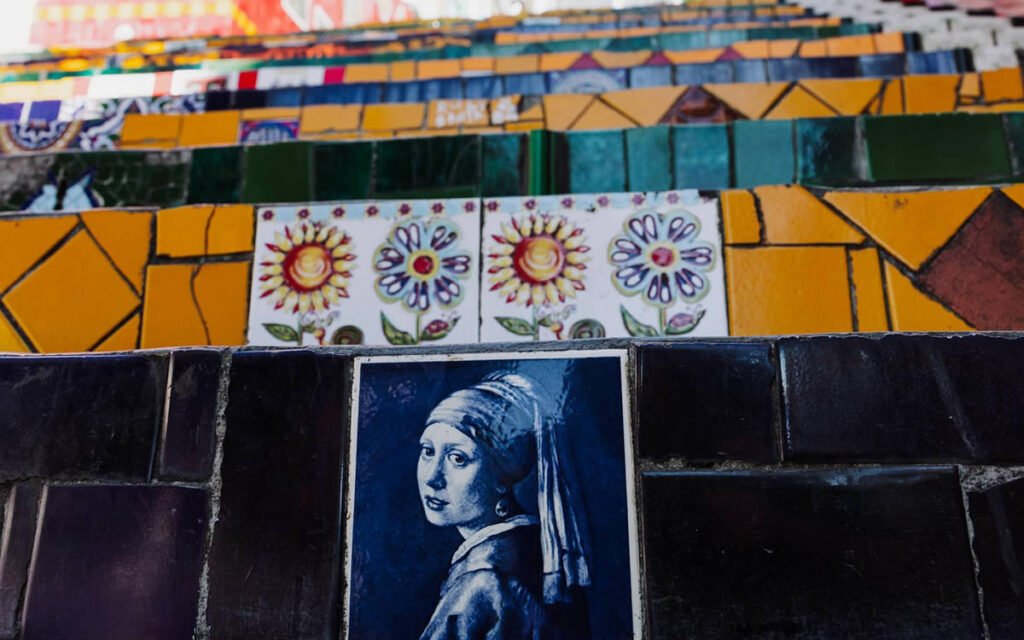
Sadly, Selarón passed away in 2013, but his legacy lives on. Selarón Steps is not just a tourist spot, but a symbol of the human capacity to transform the ordinary into the extraordinary. It’s impossible not to be moved knowing that, until his final days, the artist dedicated his life to this monumental creation.
Fun Facts You Need to Know
Did you know that Selarón Steps has been the setting for music videos and advertising campaigns? The site gained international fame when it appeared in music videos by artists like Snoop Dogg and U2. Additionally, the staircase has been the stage for weddings, photo shoots, and even love declarations.
Another interesting fact is that Selarón included many tiles with images of pregnant women in his work. For him, these figures symbolized a phase of his life and his love for creation. It’s a subtle and poetic way to realize how much every detail of the staircase holds special meaning.
The Best Time to Visit and Essential Tips
If you want to capture the best photos without big crowds, the tip is to visit the staircase early, between 8 am and 9 am. At this time, the natural light favors photography and the flow of tourists is still low. Another interesting moment is late afternoon, when the sun creates dramatic shadows on the steps and the atmosphere becomes even more magical.
But beware: as it’s a public area, it’s advisable to keep an eye on your belongings, especially during busier times. Rio de Janeiro is a vibrant city, but as with any major tourist destination, it’s always good to stay alert.
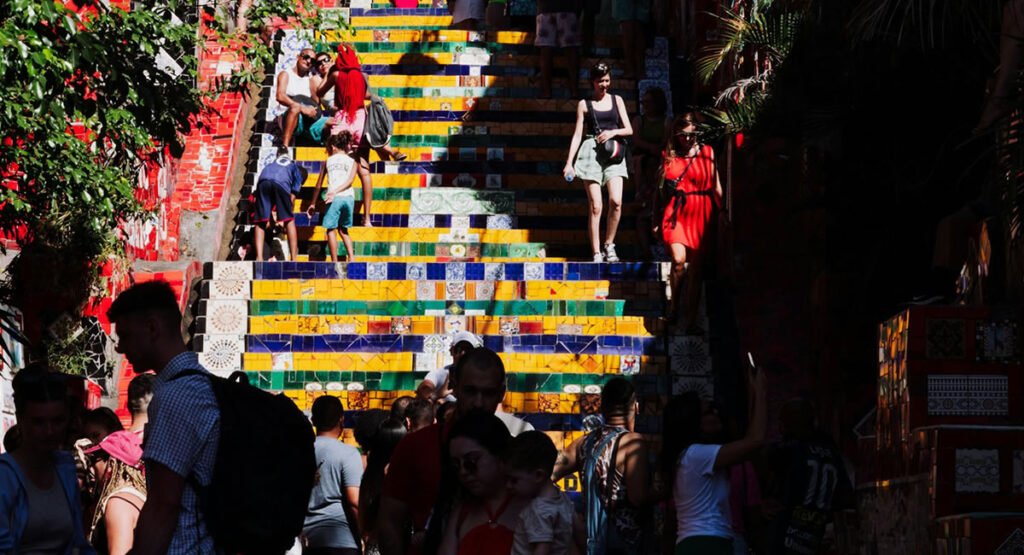
To make the most of the experience, wear comfortable clothes and appropriate footwear. The staircase is long and requires some effort, especially if you plan to explore every detail or continue climbing up to Santa Teresa, one of the city’s most charming neighborhoods.
How much does it cost to visit Selarón Steps?
One of the biggest draws of Selarón Steps is that it’s completely free. Located in the Lapa and Santa Teresa neighborhoods, access is open to tourists and locals, making it a must-stop for anyone exploring Rio de Janeiro. Although there’s no entrance fee, many visitors choose to contribute by buying art and souvenirs from local vendors or by supporting street artists performing in the area.
The environment is friendly and accessible, but it’s recommended to visit during the day to better enjoy the beauty of the staircase and ensure more safety.
A Connection Between Lapa and Santa Teresa
When you finish climbing the staircase, you’ll be in Santa Teresa, a neighborhood known for its artistic and bohemian aura. Here, the pace is different: calmer, more contemplative. Explore the cobblestone streets, visit the art galleries, and stop for a coffee at one of the region’s charming bistros.
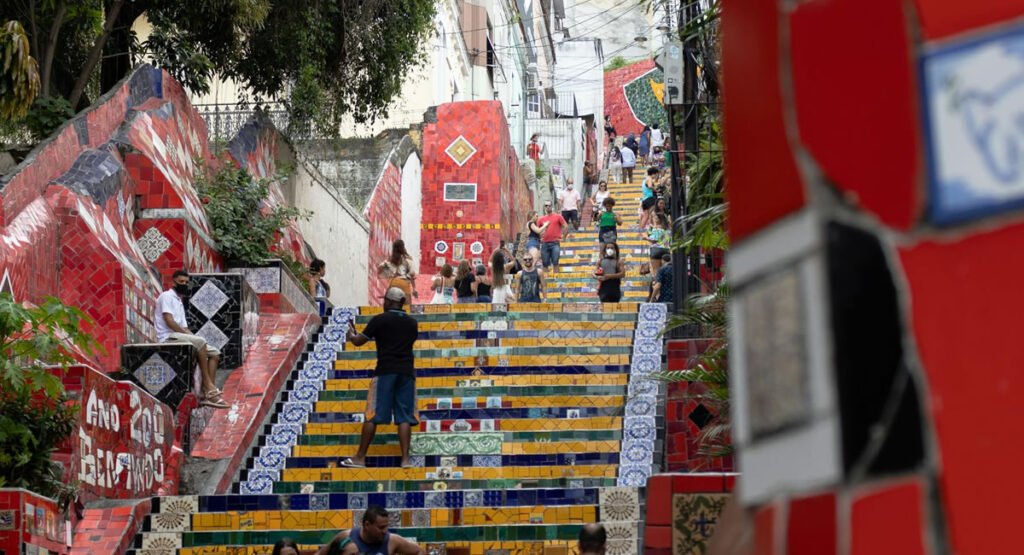
Selarón Steps is much more than a passage point between two neighborhoods. It’s a cultural bridge that connects the energy of Lapa with the charm of Santa Teresa. And believe me: this contrast makes the visit even more special.
In short, Selarón Steps is much more than a simple staircase; it’s a monument to public art and Brazilian culture. With its colorful steps and rich history, it remains one of Brazil’s most iconic postcards and a must-see destination for any visitor to Rio de Janeiro.
Frequently Asked Questions about Selarón Steps
Why is Selarón Steps famous?
The Selarón Steps, located in the heart of Rio de Janeiro, is famous for its explosion of color and creativity. Created by Chilean artist Jorge Selarón, it has become a cultural icon and one of the city’s most visited destinations. The staircase is covered with over 2,000 colorful tiles, many sent from different parts of the world, making it an international tribute to art and diversity.
Each step of the staircase tells a part of Selarón’s story and his love for Brazil. His passion transformed the space into an open-air gallery, drawing visitors in search of the perfect photo backdrop and a deep dive into Rio’s culture.
How much does it cost to visit Selarón Steps?
One of the biggest draws of Selarón Steps is that it’s completely free. Located in the Lapa and Santa Teresa neighborhoods, access is open to tourists and locals alike, making it a must-stop for anyone exploring Rio de Janeiro. While there’s no entrance fee, many visitors choose to contribute by buying art and souvenirs from local vendors or by tipping the street performers who entertain in the area.
The atmosphere is friendly and welcoming, but it’s best to visit during the day to fully appreciate the beauty of the staircase and ensure a safer experience.
What is the meaning behind Selarón Steps?
Selarón Steps is more than just a tourist landmark; it’s a living, dynamic work of art. According to Jorge Selarón, his creation was a “tribute to the Brazilian people.” Each tile was carefully chosen or donated, representing the interplay of cultures and the connection between the local and the global.
Selarón himself stated that his work would never be finished, as he constantly added new tiles, renewing the staircase’s meaning over time. Today, it symbolizes a blend of creativity, Brazilian identity, and a global contribution to art.
How many steps does Selarón Steps have?
The staircase has exactly 215 steps, each one decorated with colorful tiles from over 60 countries. The meticulous work Selarón put in transformed every step into a unique piece, creating a stunning visual impact whether you’re heading up or down.
Plus, the climb itself is an experience: as you ascend, you’ll encounter different stories told through the tiles, some of which reflect themes of love, diversity, and culture.
What’s at the top of Selarón Steps?
At the top of the staircase, you’ll be rewarded with incredible views of the Santa Teresa neighborhood, known for its bohemian vibe and historic architecture. There are also bars, cafés, and art galleries that round out your visit, letting you explore more of the local culture after taking in the steps.
Plus, the top is a great spot to notice details you might have missed on the way up, like tiles with unique messages and designs.
What’s the best time to visit Selarón Steps?
The best time to visit is in the morning or early afternoon, when the sunlight really brings out the vibrant colors of the tiles. These periods also tend to be quieter, giving you a chance to snap photos without too much crowd interference.
Avoid visiting at night, as the area can be less busy and, consequently, less safe. If you do go around sunset, take the chance to wander the surrounding streets and soak up the cultural nightlife in Lapa.
Who was Selarón in Rio de Janeiro?
Jorge Selarón was a self-taught Chilean artist who found his home and greatest inspiration in Rio de Janeiro. He arrived in Brazil in the 1980s and, driven by his passion for the city, began renovating the steps that connect the Lapa and Santa Teresa neighborhoods.
Selarón worked tirelessly on his masterpiece until his death in 2013, making the staircase a testament to his dedication to Brazilian art and culture. Today, he’s remembered as one of the most significant foreign artists to contribute to Brazil’s cultural scene.
Where is the most famous staircase in Brazil?
Selarón Steps, considered the most famous in Brazil, sits between the Lapa and Santa Teresa neighborhoods in Rio de Janeiro. This landmark is easily accessible and serves as a gateway to exploring other historic and cultural attractions in the city.
To get there, use public transit like the metro or bus, or take a short walk from the heart of Lapa.
Which metro station should you get off at for Selarón Steps?
The closest metro station to the staircase is Cinelândia, on Line 1 of Rio’s metro. From there, you can walk about 15 minutes or grab a taxi to Lapa, where the entrance to the steps is located.
This easy access is a big reason why it’s so popular with travelers from around the world.
How many tiles are on Selarón Steps?
The staircase features more than 2,000 tiles, many of them sent by admirers from all over the planet. Each piece was placed by hand by Selarón, resulting in a collection that ranges from country landscapes to inspiring messages.
This diversity of tiles reflects the universality of the work, blending local culture with international influences.