Prainha Beach Rio: The Complete Surfer’s Paradise Guide
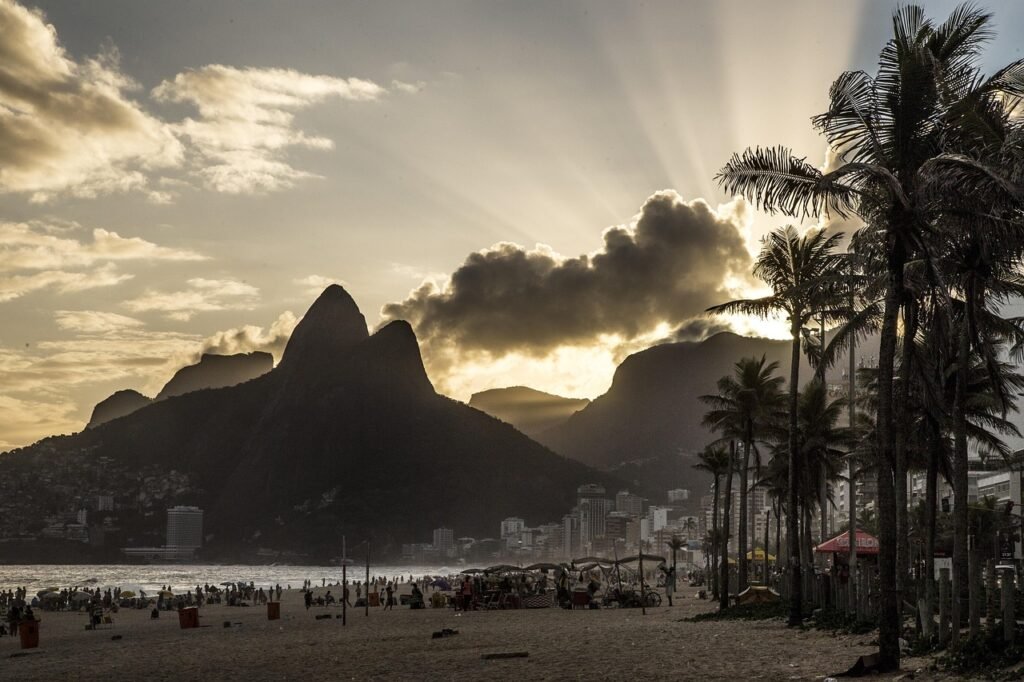
🇧🇷 POR | 🇫🇷 FR | 🇺🇸 EN | 🇪🇸 ES Prainha Beach is tucked away between Recreio dos Bandeirantes and Grumari in Rio’s West Zone, and it’s considered one of the few urban beaches in the world with a Blue Flag certification — the international seal of environmental quality renewed for the 2024/2025 season. The easiest way to get there is by car or ride-share app (about 48 km from downtown, roughly 1h to 1h30 in normal traffic); if you’re taking public transport, hop on the BRT Transoeste to Recreio Shopping and then a van to the end of the line. Entry to the Prainha Municipal Natural Park is free, and the few kiosks charge around R$ 20 to R$ 40 for a light meal (approximate 2025 prices — confirm on-site before you go). But it’s in the details — the wave that breaks only here, the trail that climbs the rocky headland, the absence of any building in whatever angle you photograph — that Prainha sets itself apart from everything you’ve ever seen in Rio. Aerial view of Prainha, in Rio de Janeiro’s West Zone. | Photo: klimaplay1 / Pixabay What you’ll find in this guide How to get to Prainha Best time, best hour, and how long to stay What to see and do at Prainha The surfers’ beach: why Prainha is different Prainha Municipal Natural Park What to combine on the same day Where to eat nearby Practical tips and our take Frequently asked questions How to get to Prainha “Can you go without a car?” You can — but it takes patience and planning. By car or ride-share app is the most comfortable option. Leaving from Barra da Tijuca, head along Avenida das Américas toward Recreio, pass Recreio Shopping, continue on Estrada dos Bandeirantes and then Estrada da Prainha, which winds along the headland to the parking lot. The total distance from downtown is about 48 km; allow 1h to 1h30 depending on the time of day. Parking inside the Natural Park is paid (prices subject to change — check with Rio’s City Hall before you go) and spaces are limited. On sunny summer days or holidays, the Municipal Guard closes access when capacity is reached, so arrive before 9 am to guarantee entry. By app (Uber, 99), the ride from Barra runs around R$ 30 to R$ 50. By public transport — take the BRT Transoeste from Terminal Alvorada (Barra da Tijuca) or any station along the line to the Recreio Shopping stop. From there, vans and alternative buses run along Estrada dos Bandeirantes to Prainha — ask the drivers about the destination, as routes vary. The full trip to the beach gate takes between 1h30 and 2h from downtown. By subway, the line doesn’t reach the West Zone. The closest connection point is General Osório Station (Ipanema/Line 1), from where you catch a bus to Barra da Tijuca and then the BRT. By taxi or app from the South Zone: the ride from Leblon runs around R$ 60 to R$ 90 (2025 estimate — confirm on the app). It’s worth combining a ride-share there and a van back to save money. Best time, best hour, and how long to stay Prainha works year-round, but the experience changes a lot depending on when you go. Summer (December to March) — bigger waves, guaranteed sun, and the beach is more crowded. If you want to surf or watch amateur competitions, this is the period. The downside: car access can be blocked on peak days, and the headland trail gets packed on weekends. Fall and winter (April to August) — the beach is quieter, the sea calmer on some days, and Rio has mild winters (averages of 22°C). The afternoon light hits the rocks of the headland differently, and anyone taking photos will come away with images that are quite distinct from summer shots. Regardless of the season, arrive before 9 am. After 11 am on weekends and holidays, the parking lot is already full and access to the beach gets congested. If you get there early, you’ll have the sea almost to yourself for the first hour. As for time: set aside a full day. The combination of beach, headland trail (round trip in 40 minutes), and lunch at the kiosk fills the day easily. If you’re combining it with Grumari, two days are ideal — or one day leaving very early. What to see and do at Prainha Prainha is about 700 meters long and flanked by hills covered in Atlantic Forest. There are no buildings, no condos, no newsstands. What you see — from any point on the sand — is sea, rock, and vegetation. That’s not tourist hype: it’s the reason the Ministry of the Environment protects the area within the Municipal Natural Park. Besides swimming (with caution — currents can be strong), you can: North headland trail: a short climb over the rocks to a lookout with a view of the entire cove. On clear days you can see the profile of Grumari on the other side. Wear sneakers — flip-flops slip on wet rock. Watch the surf: even non-surfers stand and watch. The wave breaks consistently and allows maneuvers that other Rio beaches don’t offer. Photograph the sunset: the sun sets on the left side of the beach, painting the hills orange — unlike any sunset in Copacabana or Ipanema. The surfers’ beach: why Prainha is different Prainha attracts surfers from all over the state because of the consistent shape of its waves. | Photo: Fabricio_Macedo_Photo / Pixabay Rio’s surfers know what Prainha is, just like climbers know what Corcovado is. The beach receives south swells that, when they hit the rocky bottom of the cove, gain shape and power. The result is a wave that can reach 2 meters on strong swell days, with good sections for cutbacks and aerials. The annual Prainha surf competition draws athletes from all over the state. If you go during a competition, you’ll find sponsor tents, live broadcasts,
CCBB Rio de Janeiro: Complete Guide to Free Exhibitions and Cultural Programming
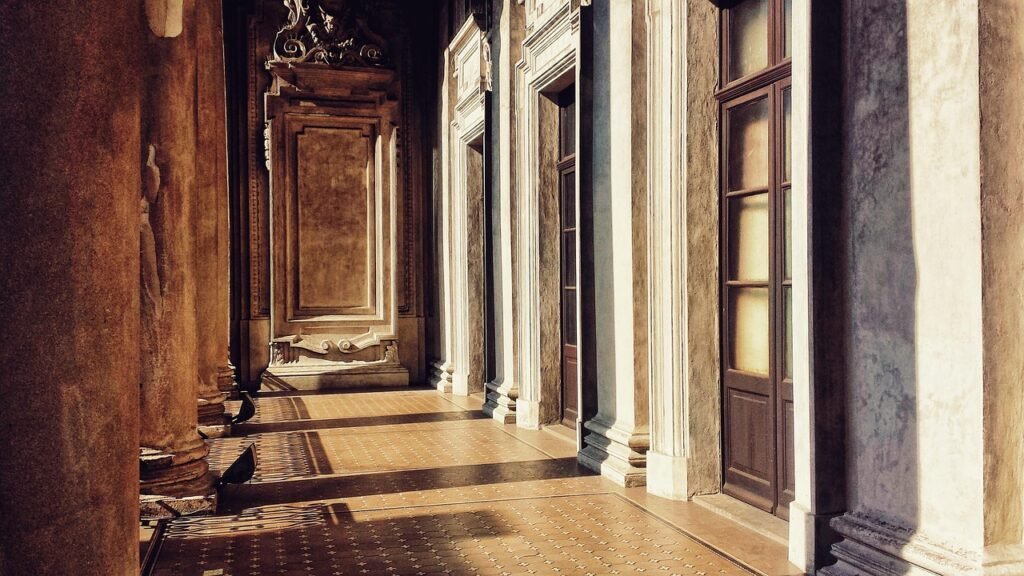
🇧🇷 POR | 🇫🇷 FR | 🇺🇸 EN | 🇪🇸 ES The Centro Cultural Banco do Brasil sits in Rio’s historic heart at Rua Primeiro de Março, 66, and is open Wednesday through Monday from 9 AM to 8 PM — with free entry to all exhibitions. Inside, what you find is nothing like what the street suggests: marble floors, ornate columns, a rotunda with a dome that once served as the trading floor for the Public Funds Exchange, and walls that now house works by artists from around the world. If you’re in downtown Rio for a day and don’t step inside, you’ll miss one of the most complete free attractions in the city. The CCBB occupies a neoclassical building from the early 20th century, listed as a historic landmark. | Photo: larahcv / Pixabay What You’ll Find in This Guide A Building That Holds Over a Century of History What You’ll Find in the CCBB Program How to Get to CCBB Rio Best Time to Visit and How Long to Stay What to Combine on the Same Day Where to Eat Near CCBB Practical Tips Before You Visit Is It Worth It? — Who the CCBB Is For Frequently Asked Questions A Building That Holds Over a Century of History The building on Rua Primeiro de Março wasn’t built to be a cultural center. In 1906, it was the headquarters of the Rio de Janeiro Commercial Association — a temple of commerce and finance, designed with the solemnity of those who wanted to impress. In 1920, Banco do Brasil took over the space, and those marble rooms saw lines of bank customers for decades. The central rotunda, with its imposing dome, once hosted the trading floor of the Public Funds Exchange. Imagine the noise of shouted negotiations under that dome — and compare it to the contemplative silence of an art gallery today. The transformation began in the late 1980s, when Banco do Brasil decided to preserve the building by converting it into a cultural center. The renovation kept the Ionic columns, the original marble, and the rotunda’s dome, and the CCBB opened its doors in 1989. Since then, the space has counted over 58 million visits and more than 2,450 projects in visual arts, film, theater, dance, music, and debate of ideas. That’s no small number for a place that has never charged admission. What You’ll Find in the CCBB Program The CCBB’s program changes frequently, and that’s exactly what makes it worth checking the official website before each visit. But the format is stable enough for you to know what to expect. Visual arts exhibitions usually occupy the upper floors of the CCBB, with high-level curation. | Photo: ShuaiGuo / Pixabay Visual Arts Visual arts exhibitions are the main draw. The CCBB brings retrospectives of renowned artists and thematic shows of international reach — the kind of curation that, in other contexts, would charge dozens of reais for admission. The space on the upper floors has been adapted to host large-scale installations, and the lighting in the rooms is careful enough for you to feel the difference. Check the current schedule at ccbb.com.br/rio-de-janeiro/programacao. Cinema The CCBB maintains a regular film program, with thematic cycles, retrospectives, and screenings of movies that rarely make it to the commercial circuit. Tickets for film sessions have a symbolic price, and in some cycles, they are also free — worth checking beforehand. Theater, Dance, and Music Dance and theater performances are part of the regular program at CCBB Rio. | Photo: romanen / Pixabay The CCBB theater hosts dance performances, plays, and concerts with surprising regularity. The space is smaller and more intimate than the city’s big theaters, which can be an advantage — you’re close to the stage and the performance. To guarantee a seat, buy tickets in advance online or in person at the box office. Educational Activities For those going with kids or wanting to deepen their visit, the CCBB offers guided tours and cultural education activities, usually linked to the exhibitions on display. Scheduling is typically done directly with the space — call (21) 3808-2300 or check the website. How to Get to CCBB Rio The CCBB is in Rio’s Historic Center, well-served by metro, buses, and ferries. | Photo: heibe / Pixabay The address is Rua Primeiro de Março, 66, Centro. The location is one of the most accessible in Rio — the downtown area is the convergence point for practically all of the city’s transportation. By Metro The most practical way is the metro. The nearest station is Uruguaiana — check the MetrôRio app for the line and operating hours, as times vary by day of the week. From the station exit to the CCBB’s door, it’s just a few minutes on foot through the historic center. By Bus Dozens of bus lines pass through the downtown area and the Praça XV region, which is just a few meters from the CCBB. If you’re coming from Copacabana, Ipanema, or Barra, look for buses heading to the city center — the closest stop to the CCBB is on Rua Primeiro de Março itself or on parallel streets. By Ferry Those coming from Niterói on the Praça XV ferry disembark less than 200 meters from the CCBB. It’s literally the most scenic way to arrive: you cross Guanabara Bay with the city ahead of you and step off right in the historic heart of downtown. By Taxi or Ride-Share A taxi or Uber from Copacabana to the CCBB costs between R$ 30 and R$ 50, depending on the time and traffic. During peak hours downtown, the metro is much faster. By Car Coming by car isn’t the best idea. Parking in the downtown area is expensive, and traffic can be chaotic on weekdays. If you do drive, prefer weekend mornings. Best Time to Visit and How Long to Stay The CCBB is open Wednesday through Monday, from 9 AM to 8 PM. It’s closed on Tuesdays — don’t forget that before heading
The Niemeyer Way in Niterói: A Self-Guided Tour of Oscar Niemeyer’s Masterpieces
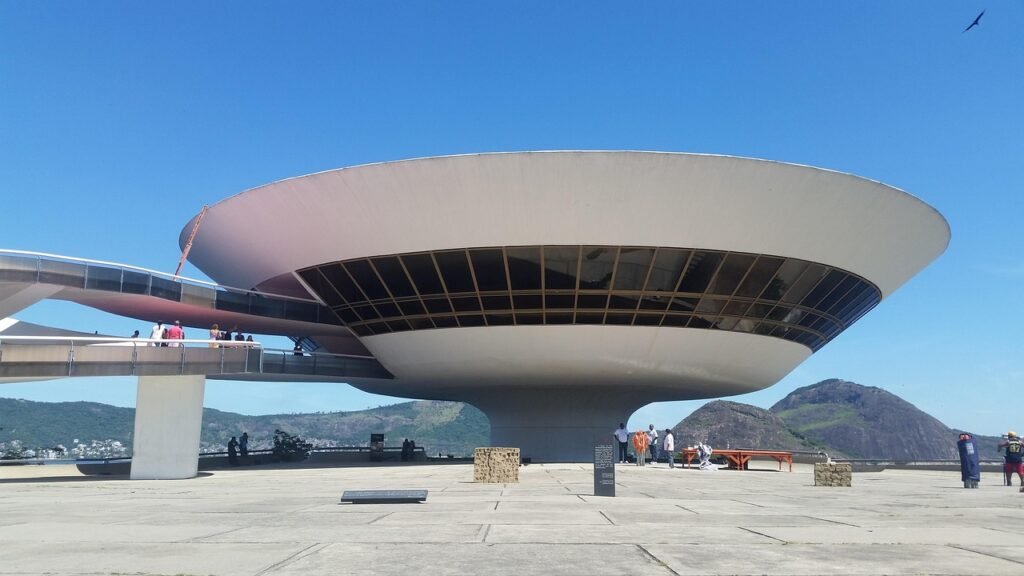
🇧🇷 POR | 🇫🇷 FR | 🇺🇸 EN | 🇪🇸 ES The Niemeyer Way is one of the most beautiful architectural routes in Brazil—and it’s less than 20 minutes from Rio de Janeiro. Stretching about 11 km along Niterói’s waterfront, Oscar Niemeyer left a sequence of buildings that look like they landed there from the future: the MAC with its flying-saucer form atop Boa Viagem Hill, the Popular Theatre hugging the curve of the beach, the Roberto Silveira Memorial with its white ramps. Entry fees range from free to R$ 20 (prices as of June 2026—check the official site before you go), the ferry from Rio costs around R$ 10, and the entire route can easily be done in a day. What separates a regular visit from one you’ll want to repeat is knowing the right order to see everything—and that’s exactly what this guide delivers. What You’ll Find in This Guide What is the Niemeyer Way How to Get There: Ferry, Car, or Bus What to See: MAC, Popular Theatre, Memorial & More Hours, Prices & How Much Time to Budget Best Time to Visit What to Combine on the Same Day Where to Eat Nearby Practical Tips & My Take Frequently Asked Questions (FAQ) The Niemeyer Way, Niterói (RJ). | Photo: WagnerKiyoshi / Pixabay What is the Niemeyer Way Few people know this, but Niterói has one of the largest concentrations of Oscar Niemeyer’s work outside of Brasília. The Niemeyer Way is the name given to the collection of cultural venues designed by the architect along Niterói’s waterfront—a route that starts at Praça do Povo in the city center and follows the edge of Guanabara Bay towards the Charitas neighborhood. The complex is made up of five main works: the Museum of Contemporary Art (MAC), the Popular Theatre of Niterói, the Roberto Silveira Memorial, the Oscar Niemeyer Foundation, and Juscelino Kubitschek Square. Each has its own personality, but they all share the same language: generous curves, white concrete, and an intense relationship with the surrounding landscape. When you stop in front of the MAC and see the disc floating over Boa Viagem Hill with Guanabara Bay in the background, you understand why this building became Niterói’s symbol. The route was designed to be done on foot, by bike, or by car along the waterfront. On foot, keep in mind that walking between points can take 30–40 minutes depending on your pace and the heat of the day. How to Get There: Ferry, Car, or Bus By Ferry (The Most Recommended Option) Taking the ferry from Rio to Niterói is not just practical—it’s an experience in itself. The crossing takes about 20 minutes and offers a front-row view of Christ the Redeemer, Sugarloaf Mountain, and the city’s skyline. The ferry departs from Praça XV (Praça XV Ferry Station) and arrives at the Niterói Ferry Station at Praça Araribóia. The ticket costs around R$ 10 (check the current price on the concessionaire’s website before you go). Once you disembark, you’re just steps away from Praça do Povo—where the Roberto Silveira Memorial and the Popular Theatre are located. The MAC is about 2.5 km from there, following the waterfront. View of Guanabara Bay at dusk. | Photo: klimaplay1 / Pixabay By Car (Crossing the Rio-Niterói Bridge) By car, the most direct access is via the Rio-Niterói Bridge—Brazil’s longest bridge, stretching 13.3 km over Guanabara Bay. From Rio, enter via Linha Vermelha or Av. Brasil heading towards the Niterói exit. On the Niterói side, follow Av. Visconde do Rio Branco towards the city center to reach Praça do Povo, or continue along the waterfront to the MAC. There is parking near the museum, but it’s limited on weekends. Avoid bringing the car on busy days—the ferry is a better bet. By Bus from Rio de Janeiro There are intercity bus lines that cross the Rio-Niterói Bridge and stop in downtown Niterói, from where you can walk to Praça do Povo or catch a local bus. Check the options on the Moovit app or the intercity transport concessionaire’s website for up-to-date lines and schedules, as they change frequently. By Taxi or Ride-Share App Taking an Uber or 99 from Rio’s South Zone, expect to pay between R$ 60 and R$ 100 depending on the time and traffic on the bridge. From Galeão Airport (GIG), the ride is usually between R$ 80 and R$ 130. It’s not the cheapest option, but it’s convenient if you have luggage or a tight schedule. What to See: MAC, Popular Theatre, Memorial & More MAC Niterói — The Icon The Museum of Contemporary Art is the most famous work in the complex and deserves at least an hour and a half of your visit. The building itself—a white concrete disc resting on a circular pedestal on the seaside rock—is so striking that many people visit without even going inside the exhibitions. But it’s worth the climb: the 360° panoramic view from up there is unlike anything you’ll see in Rio. On a clear day, you can see Sugarloaf Mountain, Corcovado, Governador Island, and the Bridge—all at once, with the bay breeze in your face. The permanent collection and temporary exhibitions vary, but the MAC usually features works by contemporary Brazilian and international artists. It’s open Tuesday to Sunday, from 10 am to 6 pm (last entry at 5:30 pm). Admission is R$ 20—free on Wednesdays. Confirm prices and programming on the official Niterói City Hall website before you go. MAC Niterói — Museum of Contemporary Art designed by Oscar Niemeyer. | Photo: WagnerKiyoshi / Pixabay Popular Theatre of Niterói The Popular Theatre is located at Praça do Povo, right by the ferry exit. The structure is unlike anything else: a curved helical ramp embraces the auditorium, which seats about 1,600 people. Unlike the MAC, the Popular Theatre doesn’t have a permanent exhibition—it functions as a venue for plays, concerts, and cultural events, some of which are free. Check what’s on at the Niemeyer Way website before deciding which day to go. Roberto Silveira