Most tourists only experience Rio’s Sambadrome during Carnival—that spectacle of sound, color, and bodies in motion that takes over the Marquês de Sapucaí every February. But here’s the thing: the most iconic structure of Rio’s biggest party has plenty to offer the rest of the year, and the experience is completely different (and way more relaxed).

If you’ve ever wanted to understand how this one-of-a-kind stadium works, who the genius behind its design was, and what events happen there when the samba schools aren’t rehearsing, this guide is for you. Rio’s Sambadrome isn’t just a Carnival stage—it’s a monument of Brazilian architecture, an events hub, and a window into Rio’s culture that operates year-round.
Dica: Aproveite também para fazer estes passeios no Rio de Janeiro
Cristo Redentor de trem e tour pelo Rio de janeiro. Duração: 4 horas
Passeio grátis pelo centro histórico do Rio e Lapa. Duração: 3 horas
Free tour pelo bairro de Santa Teresa. Duração: 2h 30m
Amanhecer no mirante de Dona Marta + Cristo Redentor Duração: 4 horas
Veja todos os passeios e tranfers no Rio de Janeiro
What is the Sambadrome and why is it so special?
The Marquês de Sapucaí Sambadrome is a permanent stadium roughly 700 meters long, designed exclusively for Carnival parades and other cultural events. Its biggest quirk? It has no roof—it’s an open-air grandstand, precisely engineered so the audience gets the best possible view of the spectacle unfolding on the central runway.
The project was the work of architect Oscar Niemeyer, one of the most important names in modern Brazilian architecture, in collaboration with engineer Thales do Valle. Inaugurated in 1983, it replaced the old parades that used to happen on the streets of downtown Rio, turning the celebration into a structured, safe, and grand event.
The design is minimalist yet imposing: straight lines, exposed concrete pillars, and a simplicity that keeps all the attention on the central stage—exactly what Niemeyer was going for. It’s not a decorated building; it’s a building that is the party.
Visiting the Sambadrome outside Carnival
Here’s where it gets good for anyone who wants to explore the structure without the Carnival madness. From March to January, the Sambadrome opens for guided tours, educational visits, and also functions as a venue for other events—from lectures and conferences to one-off concerts and exhibitions.
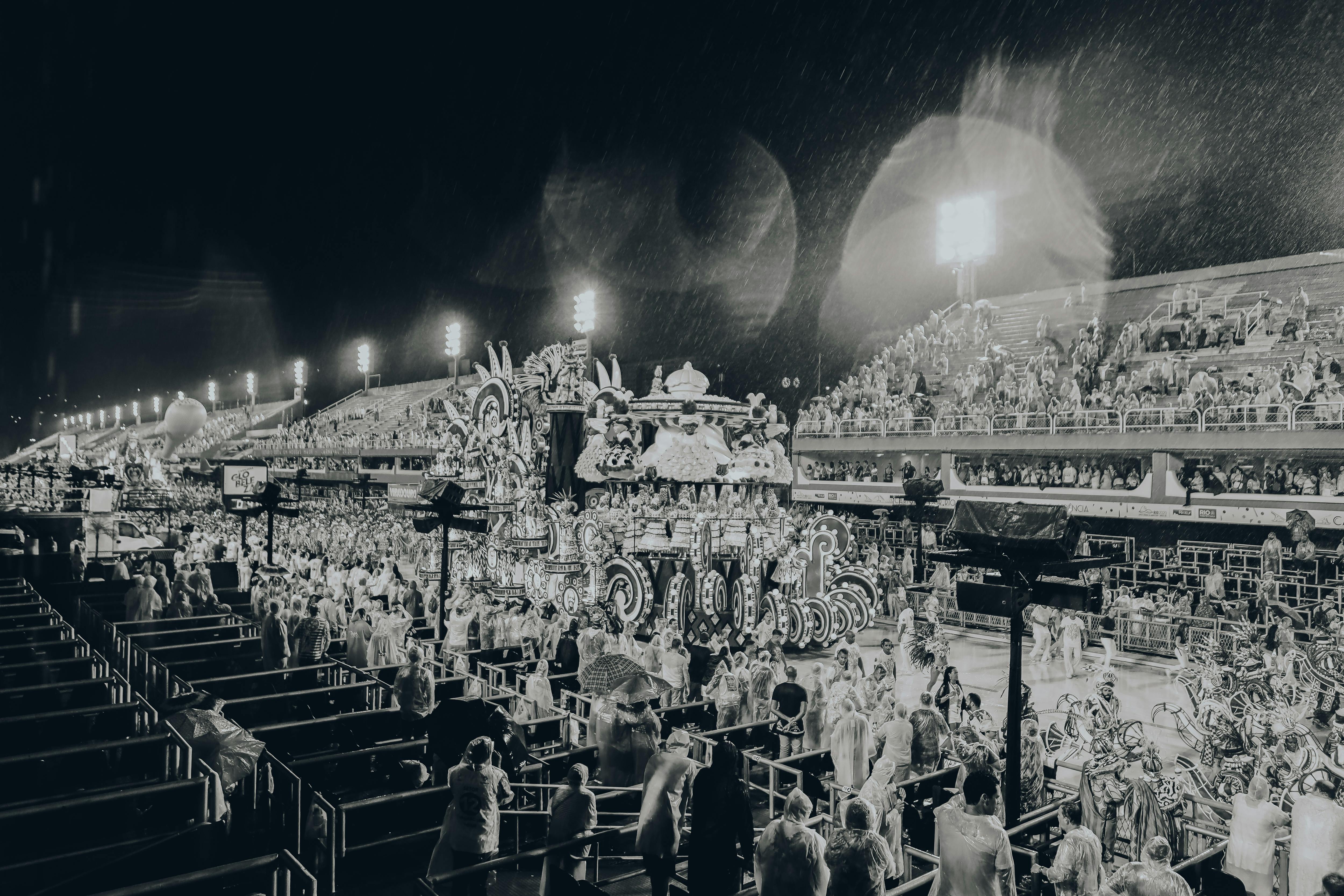
The guided tours are led by guides who know the site’s history, share insights on the architecture, explain how the parades work from a technical standpoint, and tell anecdotes about Carnival. Unlike just walking through the structure, the tour makes the most of everything there is to learn.
During the visit, you get to sit in the grandstands, imagine the organized chaos of 80,000 people in the same space, and understand why this avenue is so important to Rio de Janeiro. Guides typically take you to the schools’ dressing rooms, show you the museum with costumes from past years, and explain the behind-the-scenes of a parade.
The story behind Niemeyer’s project
Oscar Niemeyer was 75 when he designed the Sambadrome—already a living legend of architecture. His brief was clear: create a permanent stadium where Carnival could happen safely, with structure and grandeur, without damaging the streets of downtown Rio.
Niemeyer went with a solution that seemed simple but was genius: two parallel grandstands separated by a long runway, with concrete pillars that keep the crowd’s view completely unobstructed. Every detail was calculated—the incline of the grandstands, the height of the pillars, even the acoustics of the space.
The project was controversial at the time (some architects criticized the lack of “decorative beauty”), but over time people got it: the beauty is in the functionality. A stadium built specifically to put the party front and center, not the building itself. That’s rare and impressive.
Events and programming throughout the year
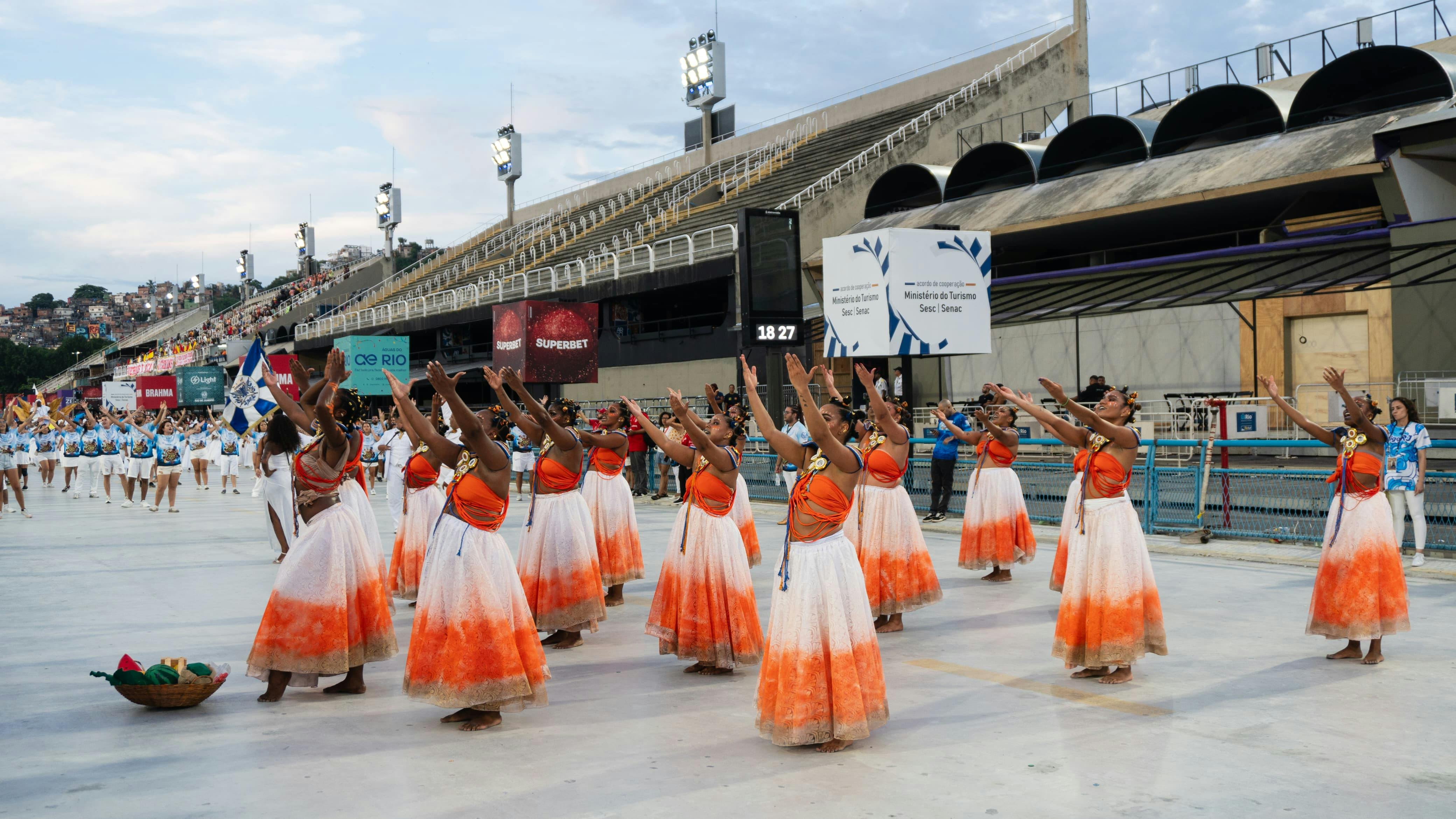
The Sambadrome doesn’t sleep after Carnival. Throughout the year, the venue hosts:
- Technical rehearsals of samba schools (September to December)—open to the public on select days;
- Concerts and musical performances—national and international artists have performed there;
- Art exhibitions—focused on Carnival, Rio’s history, or temporary themes;
- Conferences and corporate events—using the unique space for memorable meetings;
- Parties and private events—weddings, sweet sixteen celebrations, and get-togethers in a Carnival setting.
If you want, you can get in touch with the Sambadrome’s administration to check what’s on the calendar for the month you plan to visit.
How to get there from your hotel in Rio
The Sambadrome is in Cidade Nova, in downtown Rio—the address is Avenida Marquês de Sapucaí, s/nº, Centro.
The metro is the most direct way: Line 2 (green) has the “Cidade Nova” station, which is very close. You can also take the bus—several lines pass by Avenida Marquês de Sapucaí or nearby. Taxi or Uber works too, but brace yourself for downtown traffic during peak hours.
If you’re staying in Copacabana or Ipanema, the metro is your best friend—about 20-30 minutes depending on where you are. From Corcovado or the West Zone, the travel time increases, but it’s still manageable.
Practical tips for your visit
Best time to go: August through October is ideal—pleasant weather, less rain, and the events calendar is usually in full swing. Avoid January and February if you want to skip the pre-Carnival chaos.
Hours: Guided tours typically run in the morning (9 AM–12 PM) and afternoon (2 PM–5 PM). Book ahead—some days sell out.
Price: Guided tours cost roughly R$ 30–50 per person (prices may vary). Do your research beforehand to find the agency offering the best tour.
What to bring: Water, sunscreen, and a hat—there’s no shade in the grandstands during the day. Comfortable clothes are also essential since you’ll be doing a fair amount of walking.
Duration: Budget about 2–3 hours for a relaxed guided visit, no rushing.
Photography: Allowed everywhere. Bring a good camera or a fully charged phone—the composition of the grandstands and pillars makes for incredible shots, especially at sunrise or sunset.
Frequently asked questions about the Sambadrome
Can I visit the Sambadrome without a guide? Technically, it’s possible during certain periods, but it’s not ideal. The guide transforms the experience—they explain details you wouldn’t notice on your own. It’s worth paying a bit more for a guided tour.
Are the guided tours in Portuguese? Yes, most are in Portuguese. Some agencies offer English tours too—check before booking.
How long does a visit take? About 2 to 3 hours, depending on group size and how many questions the guide gets (and there are always questions!).
Can I see a Carnival rehearsal during my visit? During rehearsal season (September to December), some dates are open to the public. But it’s hit or miss—it depends on each samba school’s schedule. Ask the agency if there are open rehearsals on the day you want to go.
Can young kids keep up? Kids around 5–6 and up can handle it well. Younger ones might get tired—there’s a lot of walking.
Do I need to book in advance? Recommended, especially during school holidays and on weekends. Book at least 1–2 days ahead.
Why the Sambadrome matters to Rio’s history

Understanding the Sambadrome is understanding how the city turns celebration into structure, how architecture serves culture, and how a project by a genius like Oscar Niemeyer remains relevant 40 years after its inauguration.
It’s also a reminder that Rio’s Carnival is serious business—it involves months of preparation, investment, art, and technical know-how. It’s not just revelry; it’s a creative industry that drives the city’s economy.
Conclusion
If your visit will be during the festival, check out the dates, tickets, and boxes for Rio Carnival 2027 before choosing your sector at the Sapucaí.
The Marquês de Sapucaí Sambadrome is well worth a visit — not just during Carnival, but any time of year. It’s a monument to Brazilian culture, a space that serves as a laboratory of creativity, and a prime example of how architecture and celebration can dance together.
If you’re coming to Rio and want to experience a less obvious side of the city (beyond beaches and viewpoints), the Sambadrome is a must-see. Pair it with a trip to the Historic Center, a stroll through Lapa at night, and you’ll walk away with a much deeper understanding of what makes Rio de Janeiro, well, Rio de Janeiro.
Book your visit, pack some sunscreen, and get ready to step inside the factory of Rio’s Carnival. The celebration deserves a closer look — and you’ll leave with stories worth telling.