Quinta da Boa Vista is one of those places that still holds the history of Rio de Janeiro’s imperial families. If you’re looking for a green escape in the city, a family outing, or a well-preserved piece of colonial Brazil, this park deserves a spot on your itinerary. And the best news? It’s practically free.
What is Quinta da Boa Vista?
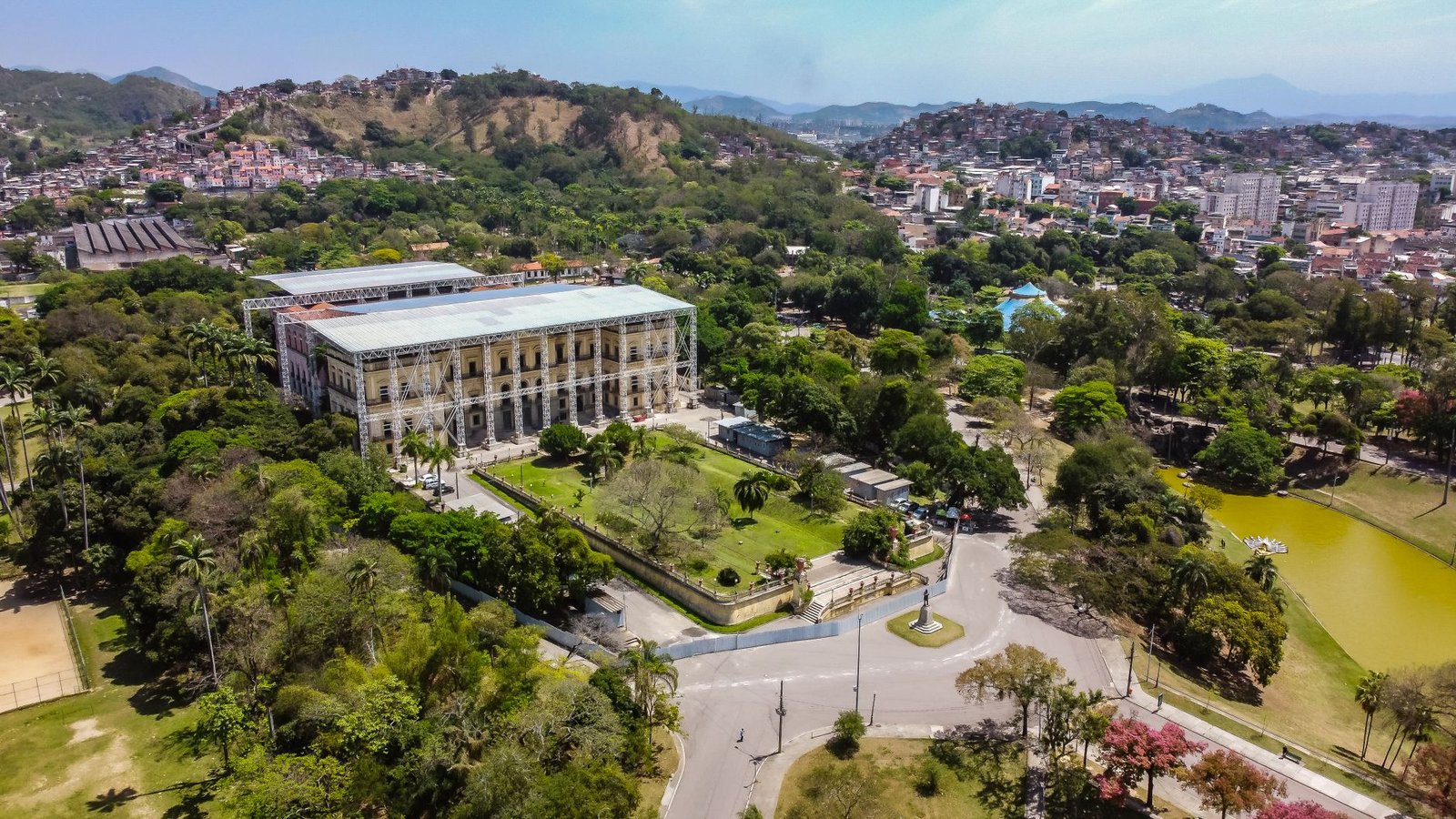
Quinta da Boa Vista is the palace that served as the official residence of Brazil’s emperors during the Empire (1822-1889). Unlike what many think, it’s not just a historic building—it’s an entire complex that includes the National Museum, historic gardens, lakes, picnic areas, and leisure spaces. The name “Quinta” comes from “quinta-feira” (Thursday), the day the royal family used to visit, although historians debate this meaning.
Dica: Aproveite também para fazer estes passeios no Rio de Janeiro
Cristo Redentor de trem e tour pelo Rio de janeiro. Duração: 4 horas
Passeio grátis pelo centro histórico do Rio e Lapa. Duração: 3 horas
Free tour pelo bairro de Santa Teresa. Duração: 2h 30m
Amanhecer no mirante de Dona Marta + Cristo Redentor Duração: 4 horas
Veja todos os passeios e tranfers no Rio de Janeiro
Located in the São Cristóvão neighborhood, Quinta covers an area of approximately 48 hectares. It’s the second-largest park in Rio by area, surpassed only by Tijuca National Park. Unlike many of Rio’s tourist attractions that charge high entrance fees, Quinta offers access at minimal cost or even free in some areas.
The history behind the walls
The original property was acquired by merchant Cristóvão de Barros in the late 17th century. Centuries later, it became the trusted residence of the Portuguese princes who came to Brazil. When the Portuguese royal family fled Napoleon in 1808 and moved to Rio, Quinta was chosen as one of their homes. Dom João VI spent time here, as did his successors, until the abolition of the monarchy in 1889.
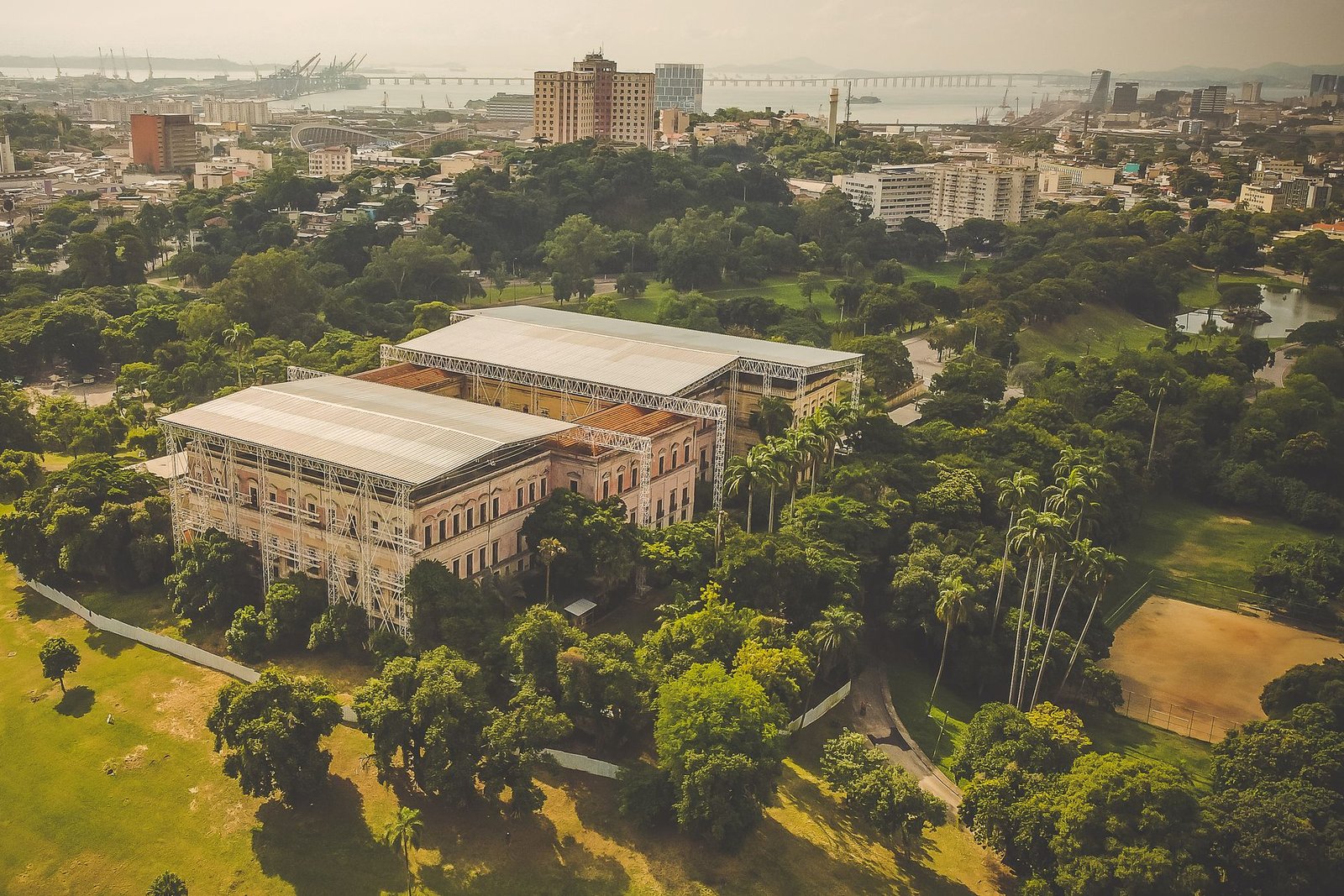
After the proclamation of the Republic, the building underwent transformations. In 1892, it became the home of the National Museum of Brazil, one of the oldest scientific research institutes in the Americas. For over a century, it operated as a collection of art, natural history, and archaeology. The neoclassical palace is an impressive example of imperial architecture, with imposing facades, tall windows, and a grandeur that makes its presence known in the neighborhood. The ornate moldings, noble hardwood floors, and interior decor reflect the splendor of the era.
The National Museum: reconstruction and renewal
In 2018, a devastating fire destroyed a large part of the National Museum’s collection, causing irreparable losses to Brazil’s scientific heritage. Dozens of collections of fossils, indigenous artifacts, sacred art, and historical documents were lost. The impact was so great that the museum needed years to rebuild its operations. The fire was one of the worst cultural disasters in modern Brazilian history.
In 2022, the National Museum partially reopened with a smaller but significant space. Today it offers exhibitions on Brazil’s natural history, including Cretaceous-period fossils, dinosaur skeletons, recovered indigenous artifacts, and colonial art. The reconstruction is still underway, but it’s already possible to visit and understand the country’s scientific history. The remaining collections are carefully preserved and displayed in restored galleries. The experience is moving because visitors understand the importance of what was lost and the ongoing recovery.

What to do at Quinta da Boa Vista
Visit the National Museum
The open museum occupies only a small fraction of the total space, but its collection is interesting. You’ll see Brazilian fossils, skeletons of extinct animals, indigenous art, and historical objects. Admission costs around R$ 20. Hours: Wednesday to Sunday, 10 AM to 5 PM. Take your time—it’s not big, but it’s informative. The experience offers a unique perspective on how life developed in Brazil millions of years ago. Guides are available for specialized tours for an additional fee.
Walk through the park
Most of Quinta is open to the public as a park. There are trails, lakes, benches for resting, and huge grassy areas. Very popular among locals who live nearby, but little visited by tourists. It’s a great place to walk, run, or simply sit and observe nature. Park entry is free. The paths are well-maintained and the vegetation is lush. There are several viewpoints over the lakes and the palace.
Family picnic
If you have kids, Quinta is perfect. There are open spaces to eat, play, and run around. The park has drinking fountains, public restrooms (sometimes with irregular maintenance), and shaded areas. Bring your own food—there aren’t many dining options inside the park, just a small café with moderate prices. Local families often bring their meals and spend an entire day here.
Photograph the historic scenery
The palace itself is visually interesting, especially at dusk when the light turns golden. The gardens, the lakes with fish, and the historic buildings offer great photo opportunities. If you’re into neoclassical architecture, you’ll appreciate the structure. The scenery is Instagram-worthy without being artificial, maintaining its historical authenticity.
Observe the flora and fauna
Quinta is home to several species of century-old trees, birds, and small animals. Birdwatchers come here regularly. The vegetation includes palm trees, mango trees, silk floss trees, and native Atlantic Forest species. It’s a biodiversity refuge within the city. During blooming seasons, the park gets even more beautiful with colorful flowers.
How to get to Quinta da Boa Vista
Quinta is in São Cristóvão, a neighborhood in Rio’s north zone. If you’re in the south zone (Copacabana, Ipanema), the trip takes approximately 30-40 minutes by car or Uber. Uber costs range from R$ 35 to R$ 60 depending on the time and demand.
Metro
The nearest metro station is São Cristóvão (Line 2). From there, it’s a 5-10 minute walk to the main entrance of Quinta. This is the cheapest option if you’re staying in another neighborhood with metro access. The line runs from 5 AM to midnight, with short intervals between trains.
Bus
Several buses pass nearby. Numbers 011, 012, and 474 go directly to the neighborhood. Ask your hotel or Uber driver for information on which is best depending on your starting point. Rio’s buses are cheap (around R$ 4). Bring coins or get a transit card at the metro.
Rental car or Uber
The most comfortable option, especially if you’re with family. The park has parking (approximately R$ 20 for the whole day) or you can use Uber and ask to be dropped off at the entrance. There are two parking lots, one paid, and small street areas.
Best time to visit
Any day works, but there are some considerations:
- Weekends: More crowded, especially with local families who use the park for walking and playing. If you want peace and quiet, avoid Saturday and Sunday afternoons.
- Weekdays: Much emptier. Tuesday, Wednesday, and Thursday mornings are ideal if you’re seeking tranquility.
- Time of day: From 9 AM is good. Avoid 11 AM-2 PM if it’s very hot. Late afternoon (4 PM-6 PM) offers great light for photos.
- Best season: Winter (June to September) is better—less hot, drier, and better visibility.
Safety at Quinta
Quinta is in a neighborhood that requires caution, but the park itself is well-frequented and has a security and police presence. Visitors during the day, especially groups or families, have little reason to worry. Avoid going at night alone. During the day and in groups, it’s safe. Stick to the main areas and avoid exploring isolated corners by yourself. The main entrance is well-monitored.

How long to stay?
Set aside 2-4 hours. If you’re only visiting the park, 1-2 hours is enough for a good walk. If you include the National Museum, add another 1-2 hours. It’s not a place to spend the whole day, but it’s perfect for a mid-morning or mid-afternoon outing. Many people combine it with the Feira de São Cristóvão and make a full day of it in the region.
Tickets and prices
- Park: Free
- National Museum: R$ 20 (full price); R$ 10 (half price); free on specific days for Rio residents
- Parking: Approximately R$ 15-25
- Uber: R$ 35-60 depending on where you’re coming from
- Metro: R$ 4 (reusable card)
Practical tips for your visit
- Bring water — there are drinking fountains, but not all of them work perfectly.
- Wear sunscreen. There isn’t much shade in some areas.
- Bring bug repellent — there are mosquitoes, especially near the lakes.
- If you want to eat inside, pack a picnic or grab something simple. Restaurant options are limited.
- Museum hours: Wednesday to Sunday, 10am-5pm. Closed Monday and Tuesday.
- No nighttime entry. The park closes at dusk (around 6pm in winter, 7pm in summer).
- Wear comfortable shoes — there’s a lot of walking.
- Loud music and parties are not allowed in the park.
Frequently asked questions
Do I need to buy a ticket to enter the park?
No. The park itself is free. You only pay if you go into the National Museum.
Is it possible to get lost inside Quinta da Boa Vista?
Not easily. There are signs and clear paths. The park is big, but it’s not a maze. If you get confused, ask another visitor or look for a security guard.
Can I bring my dog?
Officially, dogs are not allowed in the park. In practice, many people bring them, but it’s best to ask at the entrance or respect the rule.
Are there activities for young children?
Yes. The grassy areas are great for eating and playing. There’s no structured playground, but there’s plenty of space to run around and explore nature.
Is the park wheelchair accessible?
Partially. The main entrances and some paths are accessible, but not all trails. Ask at the gate about the best routes.
Combining your visit
Quinta da Boa Vista is in São Cristóvão, so you can pair it with other attractions in the neighborhood or nearby:
- Feira de São Cristóvão: Northeastern Brazilian culture, live music, and handicrafts. About a 10-minute drive away.
- Museu de Arte do Rio (MAR): Revitalized port district, a bit farther but doable as a half-day trip.
- Nearby beach: The neighborhood is relatively close to beaches like Praia da Conceição, though these aren’t as popular as the South Zone beaches.
- Museu Naval: Also in the São Cristóvão neighborhood, focusing on Brazilian maritime history.
Conclusion: Is it worth it?
Yes. Quinta da Boa Vista offers history, nature, and tranquility at practically no cost. If you’re in Rio and want to step away from the beaches and the classic tourist spots, this is a great place. For families with kids, it’s practically a must. For those who love history and architecture, the palace and its surroundings are fascinating. And even if you just want to stroll through a big green park near the city, Quinta delivers.
It’s not the most glamorous spot in Rio, but it’s authentic, beautiful, and offers a different perspective on the city’s history and nature. Go without sky-high expectations, dress comfortably, and enjoy the outing. The neighborhood is undergoing transformation with cultural revitalization initiatives, so it’s a great time to visit before bigger changes happen.