There are beach towns you visit once and never forget the color of the water. Cabo Frio is one of them. The sea there has a turquoise-blue hue that looks edited, the sand is so white it can be blinding, and on top of all that, there’s nearly 400 years of history to uncover.
Less than three hours from Rio de Janeiro, Cabo Frio is one of those destinations that caters to almost every type of traveler: those wanting a calm family beach, those seeking nightlife, those into diving, and those who love exploring forts and old alleyways. In this guide, I’ll show you what to do, the best beaches, how to get there from Rio, and why the city is a fantastic base for exploring the Região dos Lagos (Lakes Region).
Dica: Aproveite também para fazer estes passeios no Rio de Janeiro
Cristo Redentor de trem e tour pelo Rio de janeiro. Duração: 4 horas
Passeio grátis pelo centro histórico do Rio e Lapa. Duração: 3 horas
Free tour pelo bairro de Santa Teresa. Duração: 2h 30m
Amanhecer no mirante de Dona Marta + Cristo Redentor Duração: 4 horas
Veja todos os passeios e tranfers no Rio de Janeiro
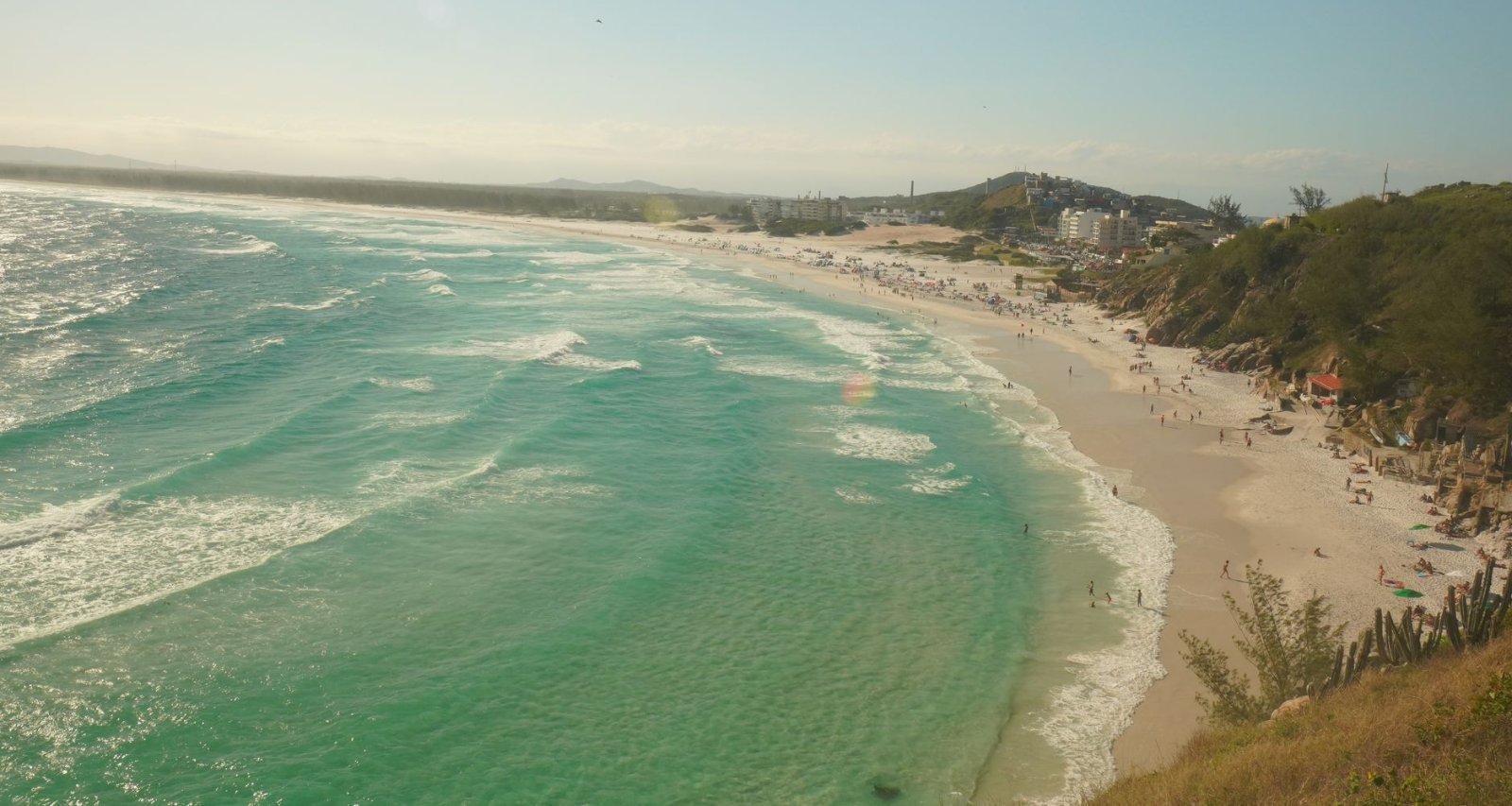
Why Cabo Frio Captivates So Many People
The first thing that grabs your attention is the water. Due to a natural phenomenon called upwelling—when deep, cold currents rise to the surface—the sea in Cabo Frio is more transparent and cooler than the beaches in Rio. This gives the water that postcard-blue color and attracts marine life that delights divers.
Add to that a brilliant white silica sand that doesn’t get too hot and squeaks under your feet, and you understand why the city is packed in the summer. But Cabo Frio isn’t just about the beach: the historic center is home to colonial churches and buildings, and the city has a solid infrastructure of hotels, inns, and restaurants for all budgets.
The Best Beaches in Cabo Frio
Each beach in the city has its own personality. It’s worth visiting more than one to feel the differences.
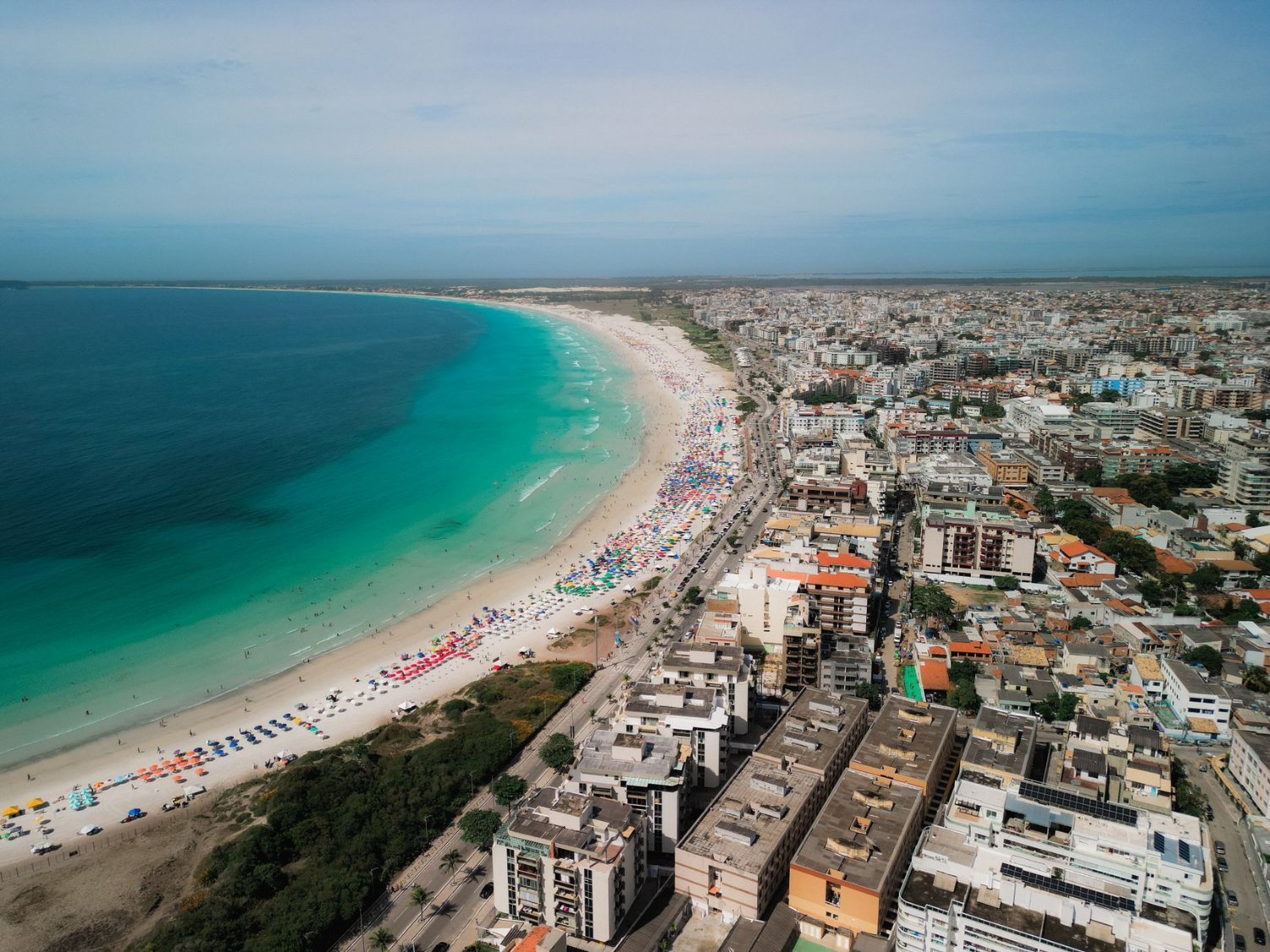
Praia do Forte (Praia Grande)
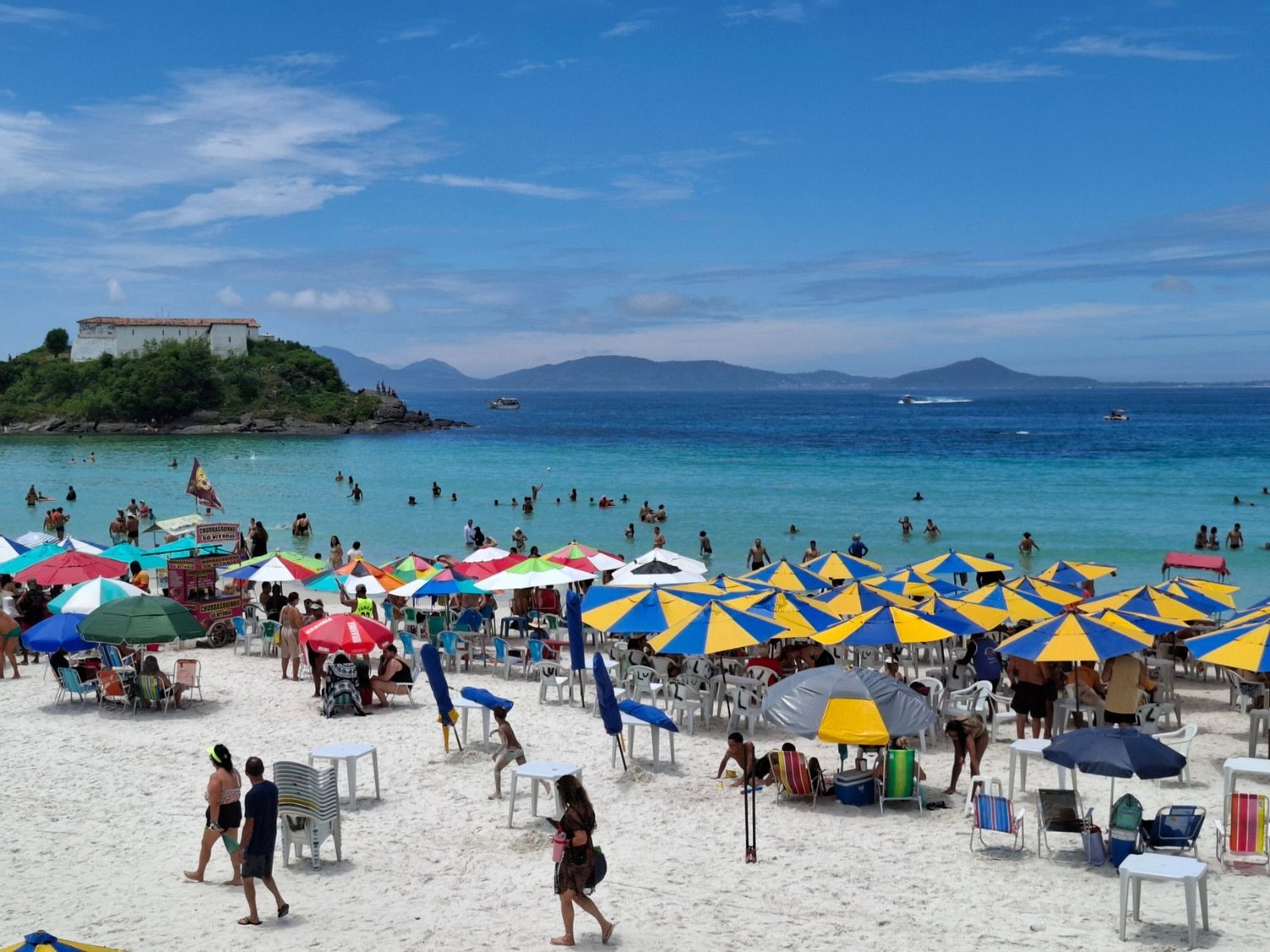
This is the most famous and busiest beach. It has a very wide stretch of sand, generally calm waters near the Forte São Mateus, and a shoreline full of kiosks. It’s great for spending the day: you can rent an umbrella, eat fresh fish, and watch the sunset behind the fortress. In the summer, it’s the most crowded.
Praia das Conchas
Smaller, more secluded, and surrounded by hills, Praia das Conchas has calm, crystal-clear waters, perfect for those traveling with kids or wanting a peaceful swim. There are short trails from here that lead to even more hidden beaches, like Praia do Forno (not to be confused with the one in Arraial). Arrive early in the summer, as the parking lot fills up.
Praia do Peró
Considered one of the most beautiful in the region, Peró has about 7 km of fine white sand, dunes, and a sea that alternates between calm stretches and waves—great for surfers and swimmers alike. It’s further from the center, which helps keep the vibe peaceful even in high season.
Praia do Foguete and Praia das Dunas
For those who love the open sea and strong waves, these two are favorites among surfers and those who enjoy long walks on the sand. They’re not the best for swimming with kids, but the landscape with the dunes makes up for it.
The Canal de Itajuru and the Historic Center
Cabo Frio isn’t all about the beach. The Canal de Itajuru connects Lagoa de Araruama to the sea and cuts through the city, creating a beautiful waterfront boardwalk scene. It’s a great place for an evening stroll, grabbing an ice cream, and watching the little boats go by. Boat tours depart from here and are well worth it.
Downtown, set aside some time to visit the Igreja de Nossa Senhora da Assunção (Church of Our Lady of the Assumption), the Convento de Nossa Senhora dos Anjos (Convent of Our Lady of the Angels, one of the oldest in Brazil, dating from the 17th century), and the Boulevard Canal area, which comes alive at night with bars, restaurants, and live music. That’s where much of the nightlife happens.
Forte São Mateus: History by the Sea
At the tip of Praia do Forte stands Forte São Mateus, built in the 17th century to protect the region from pirate attacks and brazilwood smugglers. Today, it’s one of the city’s postcards, especially at dusk, when the sun sets right behind its stone walls.
The visit is simple and cheap, and the sea view from up there is one of the best in the city. Go near sunset and bring your camera—the golden light hitting the old stone makes for beautiful photos.
Nightlife and Gastronomy
Cabo Frio has a lively night scene, especially in the summer. The Boulevard Canal area and Rua dos Biquínis (Bikini Street) are home to bars, clubs, and shops that stay open late. The famous Rua dos Biquínis, by the way, is a chapter in itself: dozens of beachwear shops with factory prices, great for updating your summer wardrobe.
For food, bet on the freshest seafood. Grilled fish, shrimp, moqueca, and the traditional bobó appear on the menus of restaurants by the sea and the canal. For a more budget-friendly option, the beach kiosks serve generous portions at friendly prices.
How to Get to Cabo Frio from Rio de Janeiro
This is the practical part that raises the most questions. The good news: Cabo Frio is easy to reach.
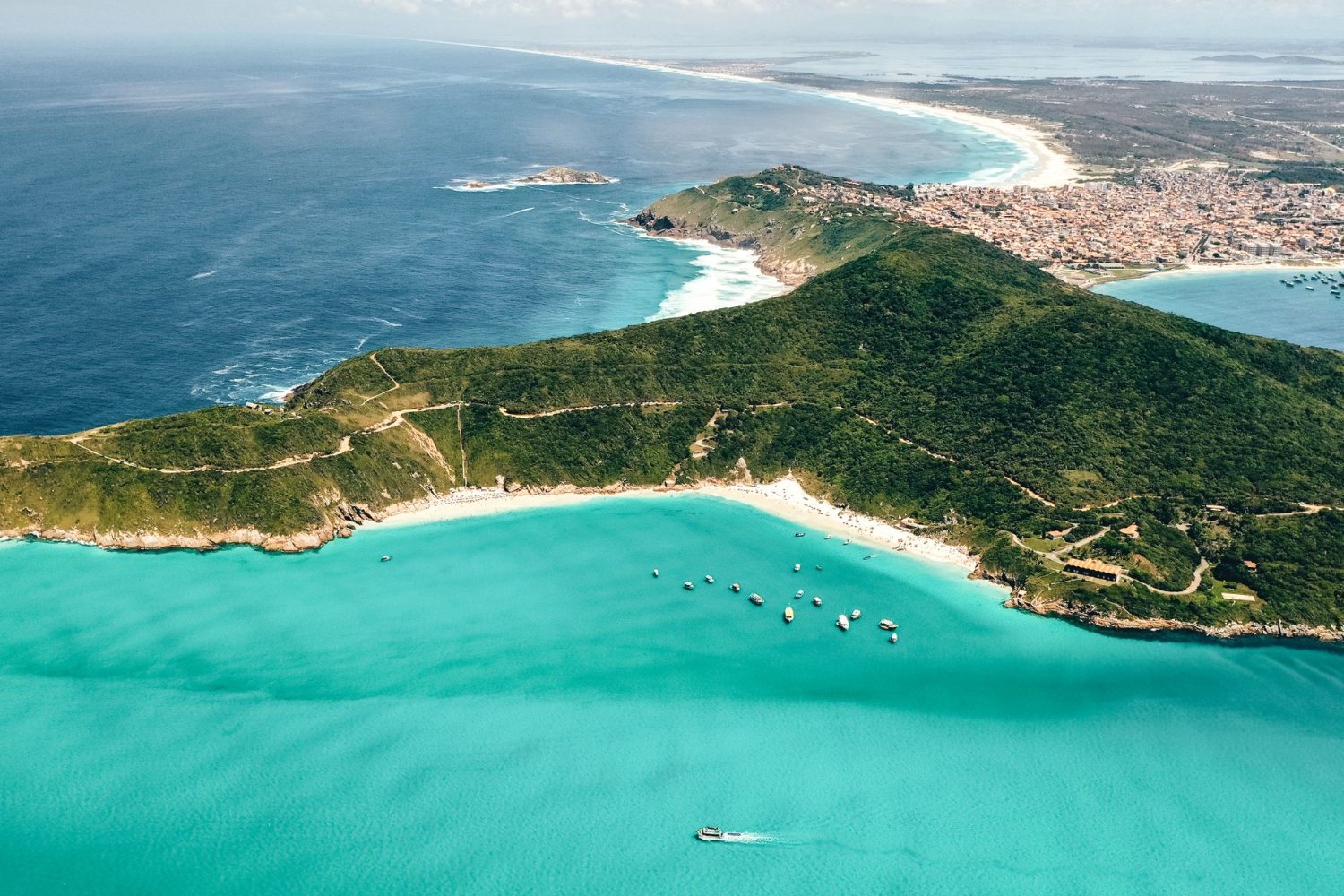
Distance: about 150 km from Rio’s center, which translates to 2h30 to 3 hours of travel, depending on traffic (which can get heavy on weekends and summer holidays).
By car: the most common route is via the Via Lagos (RJ-124), a toll road that’s well-maintained and fast. It’s the most comfortable option and gives you the freedom to explore the more remote beaches and neighboring towns.
By bus: Salineira and 1001 bus companies run the Rio–Cabo Frio route from the Novo Rio bus station several times a day. The trip takes about 3 hours and is an economical and relaxed option for those who don’t want to drive.
By plane: Cabo Frio has its own airport with seasonal flights, but most travelers coming from Rio prefer the car or bus for convenience.
Cabo Frio as a Base for the Região dos Lagos
Here’s the best argument for choosing Cabo Frio: the location. The city sits in the heart of the Região dos Lagos, making it a perfect base for exploring other destinations without changing hotels all the time.
From Cabo Frio, you can reach Arraial do Cabo in just a few minutes—the “Brazilian Caribbean” with its absurdly transparent waters and unmissable boat tours. Búzios, with its glamorous charm and Rua das Pedras, is about 30 minutes away. São Pedro da Aldeia and Lagoa de Araruama are also right there. You can easily plan a whole week of day trips with Cabo Frio as your home base.
Best Time to Visit
Summer (December to March) has the warmest weather and the most inviting sea, but it’s also when the city is most crowded and expensive. If you prefer peace and good prices, go for spring (September to November) or fall (April to June): the days are still sunny, the beaches are emptier, and accommodation costs much less.
Winter tends to be windier there—an effect of the same upwelling that makes the water cold—but even then, there are beautiful sunny days. It’s worth checking the forecast before booking your trip.
Practical Travel Tips
- Bring cash for the toll if you’re driving on the Via Lagos, and leave early on weekends to beat the traffic.
- The water is colder than in Rio due to the upwelling. Don’t be surprised—it’s part of the charm and what makes the sea so transparent.
- Take advantage of Rua dos Biquínis to buy beachwear at factory prices.
- Book accommodation in advance in the summer and on holidays; the city fills up fast.
- Use the city as a base and set aside at least one day for Arraial do Cabo and another for Búzios.
Frequently Asked Questions about Cabo Frio
How many days should I spend in Cabo Frio?
To explore the main beaches and the center at a relaxed pace, three days are enough. But if you want to use the city as a base for Arraial do Cabo and Búzios, it’s worth staying four to five days.
Is the water in Cabo Frio really cold?
Yes, it tends to be colder than the beaches in Rio due to the upwelling phenomenon. On the flip side, it’s much more transparent and full of marine life.
Cabo Frio or Arraial do Cabo, which should I choose?
You don’t have to choose: they’re right next to each other. Cabo Frio has more infrastructure, nightlife, and hotels; Arraial do Cabo has the most spectacular beaches and the best boat tours. The ideal is to stay in Cabo Frio and do a day trip to Arraial.
Can I go from Cabo Frio to Búzios?
Yes, and it’s quick: about 30 to 40 minutes by car. Many people stay in Cabo Frio (cheaper) and spend the day in Búzios.
What’s the best beach in Cabo Frio?
Praia do Forte is the most complete and lively; Praia das Conchas is the calmest and most beautiful for families; and Peró appeals to those seeking nature and space. It’s worth visiting at least two.
A Bit of Cabo Frio’s History
Cabo Frio is one of Brazil’s oldest cities. Its origins are directly tied to brazilwood: the region was so rich in the wood that it became a target for the French and smugglers early on in the colonization. To secure Portuguese control over the area, the settlement of Santa Helena was founded in 1615, which gave rise to the city.
That past explains the number of historic buildings scattered around the downtown area and the Forte São Mateus itself, built to defend the coastline. Walking through the oldest streets, near the Igreja da Assunção (Assumption Church), is like flipping through a chapter of colonial Brazil — something few people associate with a city so famous for its beaches. If you’re into history, set aside a morning away from the sand to explore this side of town.
Boat Tours and Diving
You can’t talk about Cabo Frio without mentioning life below the water. The clarity of the sea, a result of upwelling, makes the region one of the best diving spots in the Southeast. There are operators that offer introductory dives for beginners and trips for those who are already certified, with a chance to see schools of fish, sea turtles, and even shipwrecks.
Boat tours departing from the Itajuru Canal or nearby Arraial do Cabo are also practically a must. In just a few hours, you can visit beaches only accessible by sea, grottos, and snorkeling spots with water that looks like a swimming pool. It’s the kind of activity that fills up an entire day and shows why this stretch of the Rio coastline is so special.
Is Cabo Frio Worth Visiting?
Absolutely. Cabo Frio combines crystal-clear beaches, colonial history, great food, and a prime location that opens the door to the entire Região dos Lagos (Lakes Region). It’s close to Rio, easy to get to, and works just as well for a quick weekend getaway as it does for a full week of relaxation.
If you’re putting together a beach itinerary for the state of Rio, add Cabo Frio to the list — and set aside an extra day, because chances are you’ll want to stay longer. To plan your trip, be sure to check out the info on the city’s official website and the city’s Wikipedia page. Safe travels!