When Rio Becomes Pure Energy
There are few experiences in Brazil as intense as spending New Year’s Eve in Copacabana. The country’s most famous beach transforms into a massive open-air stage, bringing together locals, tourists, first-time travelers, entire families, and anyone who simply wants to feel the vibe of a night that blends faith, celebration, and a light show that makes headlines around the world. As the countdown approaches, every detail of the waterfront seems to come alive: the shimmer of the sea, the buzz of the crowd, the sound from the stages, and the anticipation of fireworks illuminating miles of coastline. No matter how many times someone has seen Rio’s New Year’s Eve, it’s impossible not to be moved when the clock strikes midnight.
Anyone planning to experience New Year’s Eve 2026 in Copacabana quickly realizes that several questions come up: what’s the best time to arrive, how do the free shows work, which alternative beaches offer a similar program, how to ensure safety and mobility during the night, and even what to expect from the weather or official protocols. This guide answers it all. It brings together reliable information based on official announcements from recent editions, data from the Rio City Hall, practices adopted by CET-Rio, recommendations from public agencies, and the event’s history. That way, you can be confident you’re reading accurate, up-to-date content free of speculation.
Dica: Aproveite também para fazer estes passeios no Rio de Janeiro
Cristo Redentor de trem e tour pelo Rio de janeiro. Duração: 4 horas
Passeio grátis pelo centro histórico do Rio e Lapa. Duração: 3 horas
Free tour pelo bairro de Santa Teresa. Duração: 2h 30m
Amanhecer no mirante de Dona Marta + Cristo Redentor Duração: 4 horas
Veja todos os passeios e tranfers no Rio de Janeiro
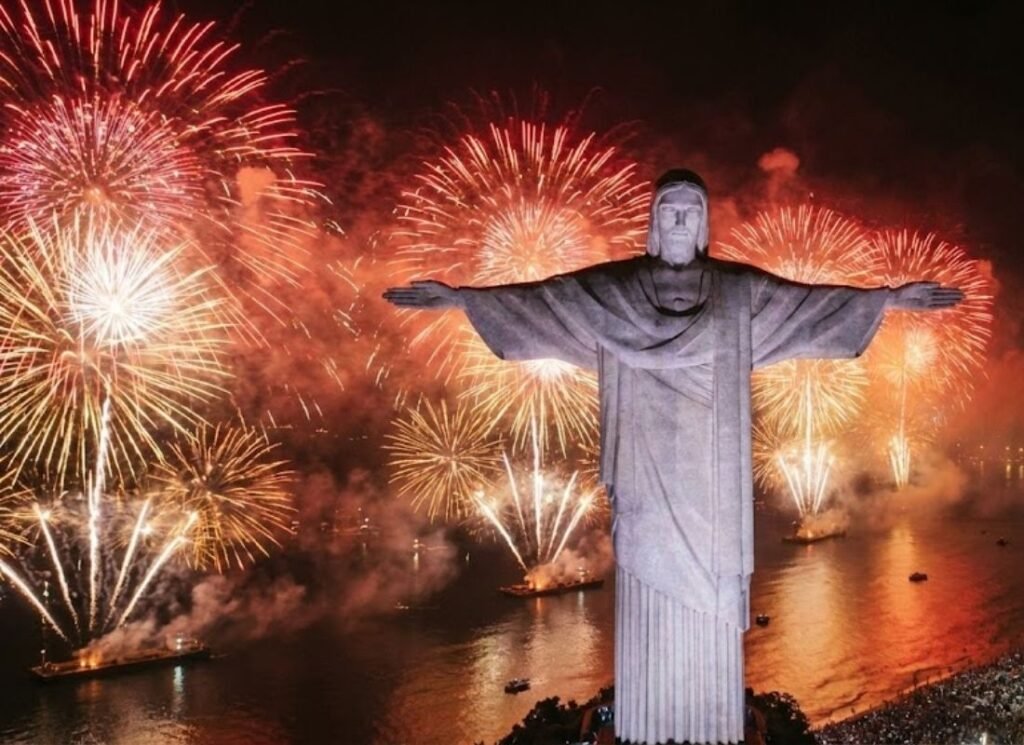
The goal is simple: to deliver a text as engaging as standing with your feet in the sand watching the fireworks reflect on the sea. If you dream of starting 2026 in Rio de Janeiro, this is your starting point.
What to Expect from the New Year’s Eve Celebration in Copacabana in 2026
The New Year’s Eve celebration in Copacabana combines tradition, structure, and enchantment. The beach typically welcomes millions of people every year and prepares for it with stages, special lighting, security teams, and support services. Although the final organization is officially announced in the second half of the year — as always happens — the history of recent celebrations allows us to safely anticipate the general format of the event.
In previous years, the party featured stages set up along the waterfront, shows with popular artists, big screens for those far from the main stage, a reinforced presence of the Municipal Guard, and a special public transportation operation. The expectation for 2026 follows the same line, keeping the focus on completely free attractions, which turns the party into one of the largest public events in the world.
The fireworks show is usually the most anticipated moment. In the most recent editions, the show lasted approximately ten to twelve minutes, synchronized with a special soundtrack broadcast from the stages. The trend is for 2026 to maintain this standard, with fireworks launched from barges positioned at sea and accompanied by lighting that turns the night into a cinematic scene.
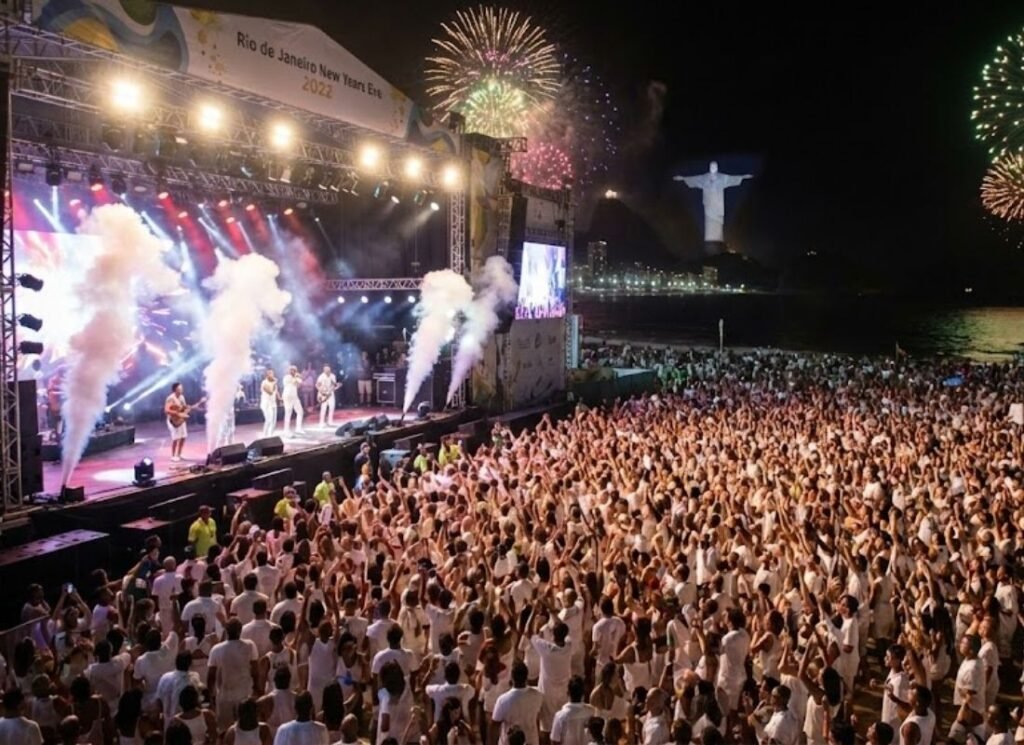
The energy of the crowd is part of the spectacle. With every second of the countdown, thousands of voices echo together, creating a moment impossible to replicate anywhere else. For anyone who has never spent New Year’s Eve in Copacabana, the impact is profound: it’s as if the entire city is celebrating some kind of collective rebirth.
Copacabana is the main stage, but it’s not the only one. Rio usually offers several parallel celebrations, equally free and with their own programming. These beaches create interesting alternatives for those who prefer less crowded spaces or want to enjoy different styles of music and energy.
The Beaches That Also Join the Party: Rio de Janeiro Beyond Copacabana
Ipanema: Charm by the Sea
Ipanema combines natural beauty with a laid-back atmosphere. The party there tends to be lighter, with smaller shows, but still with excellent infrastructure. Many cariocas prefer Ipanema because they believe the beach has a more fluid rhythm, with comfortable spacing between groups and a youthful energy. Even without a fireworks show as grand as Copacabana’s, the side view of the main fireworks is usually impressive.
| Artist / Attraction | Location / Stage | Estimated / Expected Time* |
|---|---|---|
| Gilberto Gil | Main stage — Copacabana Beach waterfront | from 8:00 PM ( |
| João Gomes | Same stage (Copacabana) | right after Gilberto Gil — around 10:15 PM |
| Alok | Same stage (Copacabana) | after the fireworks, start of 2026 (the turn of the year) — early hours of Dec 31 to Jan 1 |
Flamengo: Wide Open Space and Family-Friendly Vibe
The Aterro do Flamengo offers one of the largest open areas in the city, which turns the New Year’s Eve celebration into a very inviting environment for families and groups looking for easy mobility. The region’s stage usually hosts free attractions and offers good visibility of the fireworks launched from Guanabara Bay. Due to its proximity to downtown, it tends to be one of the simplest alternatives in terms of getting around.
Barra da Tijuca: Music, Vast Sands, and a Privileged View
Barra brings together residents of the region and tourists who prefer the west zone. In recent history, stages were set up along the waterfront and the fireworks could be seen from multiple points on the beach. The open sea, with its characteristic vastness, creates a sense of amplitude that many people consider unique. For those who already know Copacabana and want to experience a new setting, it’s an excellent choice.
Free Shows: The Soundtrack of the New Year
Nothing captures the essence of a Rio New Year’s Eve quite like its free shows. The official 2026 lineup will only be confirmed by City Hall a few months before the celebration, but there’s a pattern that repeats year after year. Stages set up in Copacabana host popular Brazilian music artists and performances that range from samba to pop, always prioritizing names that resonate with the general public.
These shows create the perfect atmosphere for the stroke of midnight. Even those who arrive early can feel the energy building as the music sweeps across the beach. The guest artists are often part of a curated lineup that celebrates the country’s musical diversity, creating moments that feel like festivals. The idea is that anyone, regardless of age, can connect with a rhythm that makes them dance, sing, or simply soak in the celebration.
On the other beaches, the concept is similar, though on a different scale. Smaller stages, but equally free and with playlists designed to keep the vibe going. Rio understands that New Year’s Eve is a collective treasure, and that music is a central piece of that heritage.
Fireworks: The Spectacle That Defines Rio
The Copacabana fireworks show is the most famous in Brazil, and for good reason. The spectacle is typically planned throughout the year and involves specialized teams, strategically positioned barges, and rigorous testing, always following strict safety protocols. Each year, the city government releases the official plan, reinforcing measures that ensure everything happens safely and under control.
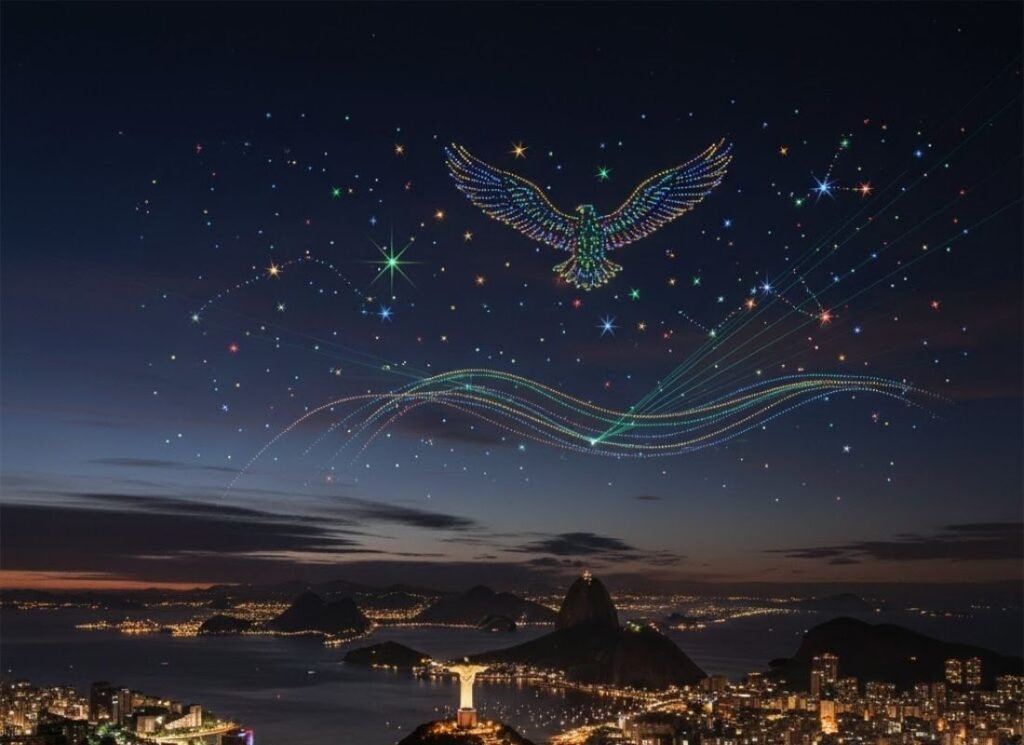
When midnight arrives, the entire beach lights up with colors that reflect off the ocean. The glow spreads across the sky and multiplies on the water, creating an almost surreal effect. People embrace, families celebrate together, and strangers share the same moment without needing to exchange a single word. This meeting of light, sound, and emotion has become a Brazilian postcard image.
Other beaches also get a glimpse of the spectacle, especially Flamengo, Ipanema, and Leme, which are relatively close by. The feeling may shift from one spot to another, but the magic remains.
Safety: How the City Organizes to Protect Locals and Tourists
Safety is one of the biggest concerns for anyone traveling to Rio for New Year’s Eve. The event draws millions of people, and the city prepares on multiple fronts to ensure everything runs smoothly. Recent editions have featured significant reinforcements from the Municipal Guard, Military Police officers, inspection teams, and a constant presence of health professionals along the waterfront.
The streets around Copacabana are typically closed to private vehicles, allowing access only for essential services and pre-registered residents. This creates a safer, more organized environment. Additionally, various areas of the beach are equipped with observation towers, medical stations, and support bases that operate throughout the night.
The most important advice remains the same year after year: avoid displaying valuables, keep essential documents in a small bag, and only bring what you truly need. The party’s energy is so strong that these simple precautions go almost unnoticed while making a huge difference in your experience.
Getting Around on New Year’s Eve: What Travelers Need to Know
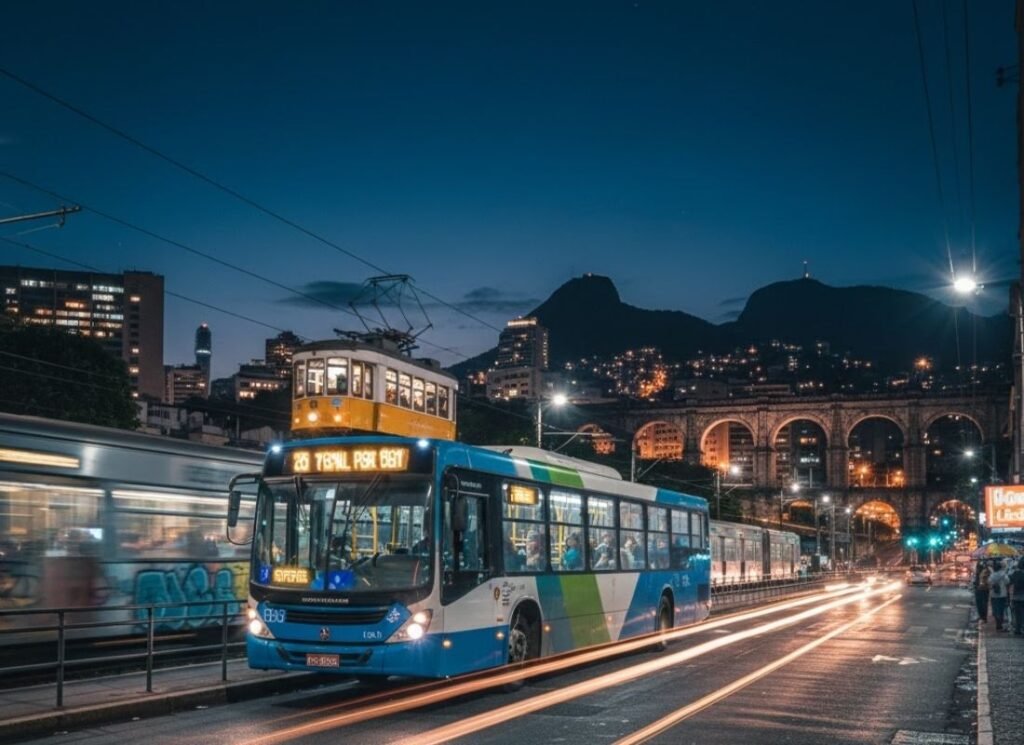
Getting around is another big source of questions. The city operates with a special plan that prioritizes public transportation. The metro typically runs with extended hours and organized access via special tickets; municipal buses follow modified—and in some cases, reinforced—routes; and boarding points are reorganized by CET-Rio to keep things flowing smoothly.
Experience from recent years shows that you should ideally arrive at the beaches before 10 PM. After that, the crowds swell and access points slow down significantly. On the way back, the biggest rush happens between 1 AM and 3 AM, but the special operation usually keeps the flow steady.
For those staying in Copacabana, Leme, Ipanema, or Flamengo, the best option is usually to walk to the beach. Strolling down the closed streets alongside other people heading toward the sea is already part of the party’s atmosphere.
Weather and Essential Tips
Rio in late December typically sees high temperatures, even at night. The high humidity can make it feel even hotter, so staying hydrated is key. It’s common to see locals and tourists carrying reusable water bottles—a sustainable and practical habit, especially since free hydration stations are usually available.
Another important point is the chance of rain. In many years, the city has had cloudy nights or light showers that didn’t dampen the spectacle. The recommendation is to check weather updates close to the big night and consider packing a light rain poncho, since umbrellas are discouraged due to the risk they pose in a crowd.
The Sensory Experience: Rio Through the Senses
New Year’s Eve in Rio is so memorable because it engages all the senses. The fireworks are the obvious visual highlight, but what truly cements the memory is the whole package. The sound of the music blends with the buzz of the crowd. The scent of the sea breeze brings that refreshing feeling that matches the rhythm of the waves. The warm sand under your feet reminds you that summer is at its peak. Together, it all creates an experience that speaks directly to your emotions.
This combination of stimuli is why the party is so remembered and so desired. The human brain responds incredibly well to environments that mix anticipation, color, collective energy, and a sense of belonging. And that’s exactly what Copacabana delivers.
Key Tips for a Stress-Free New Year’s Eve
The big secret to enjoying New Year’s Eve in Rio is understanding that every moment is part of the ritual. Arriving early lets you pick a great spot on the sand and ease into the vibe. Wearing light clothes helps you handle the heat. Bringing only the essentials keeps you mobile. Using public transport makes the journey easier. And savoring the show without rushing turns it all into a cherished memory.
Locals always say that the turn of the year in Copacabana isn’t just an event—it’s a rite of passage. Throughout the night, a sense of community grows. Strangers exchange glances and smiles without ever meeting. The ocean seems to pulse along with the crowd. When the fireworks begin, the entire city becomes light, sound, and emotion.
Copacabana as a Life Experience
Celebrating New Year’s Eve 2026 in Copacabana is living an experience that goes far beyond watching fireworks. It’s becoming part of a collective energy that’s contagious, inspiring, and unforgettable for anyone there. Rio offers the infrastructure, free music, multiple beaches with their own programming, reinforced security, organized transportation, and an atmosphere no other place can replicate in quite the same way.
This is the kind of trip that changes how you start your year. Copacabana and all of Rio transform themselves to welcome millions of people who believe in the symbolic power of the new year. If 2026 is the year you want to feel something different, the answer is right here: feet in the sand, eyes on the sky, heart wide open.