If you’ve ever researched Rio de Janeiro, you’ve definitely heard of the Rio-Niterói Bridge, one of Brazil’s most impressive engineering feats. But is it just a regular bridge? Not at all! Besides being the longest bridge in the Southern Hemisphere, it carries a ton of history, fun facts, and, of course, some common questions among tourists.
In this complete guide, we’ll tell you everything about the Rio-Niterói Bridge: from its construction to what you can expect when crossing it, whether by car, bus, or even bike (yes, there’s a way to do it!). Come along with us?
Dica: Aproveite também para fazer estes passeios no Rio de Janeiro
Cristo Redentor de trem e tour pelo Rio de janeiro. Duração: 4 horas
Passeio grátis pelo centro histórico do Rio e Lapa. Duração: 3 horas
Free tour pelo bairro de Santa Teresa. Duração: 2h 30m
Amanhecer no mirante de Dona Marta + Cristo Redentor Duração: 4 horas
Veja todos os passeios e tranfers no Rio de Janeiro
History and Cultural Significance
The bridge was built out of the need to improve the connection between the cities of Rio de Janeiro and Niterói, making it easier for people and goods to flow between them. Before it existed, the crossing was done mainly by ferries, which made travel slow and limited. The bridge’s inauguration not only cut travel time but also boosted the economic and urban development of the entire metropolitan region.
Is the Rio-Niterói Bridge Really All That?
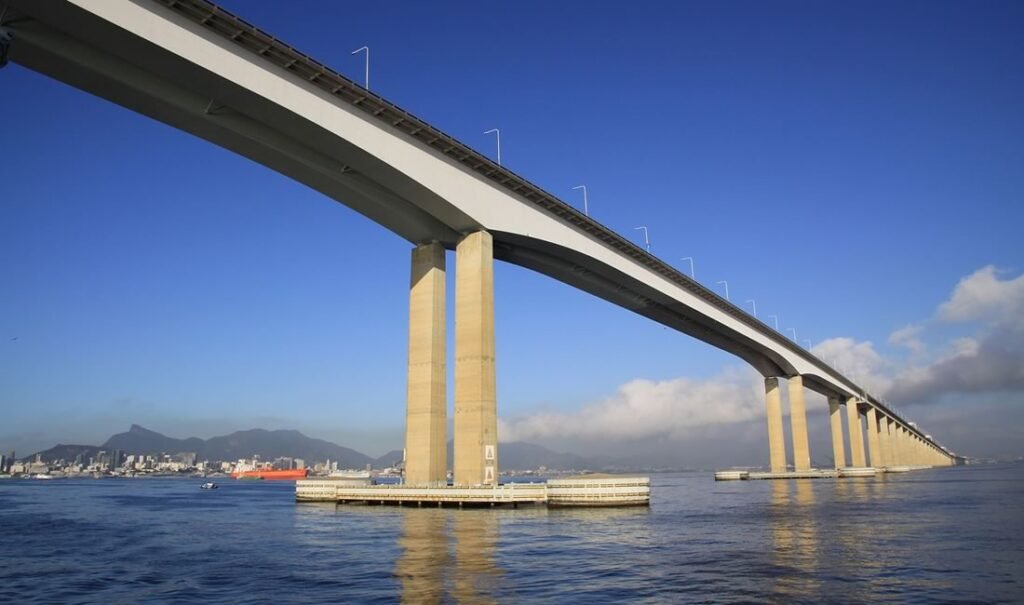
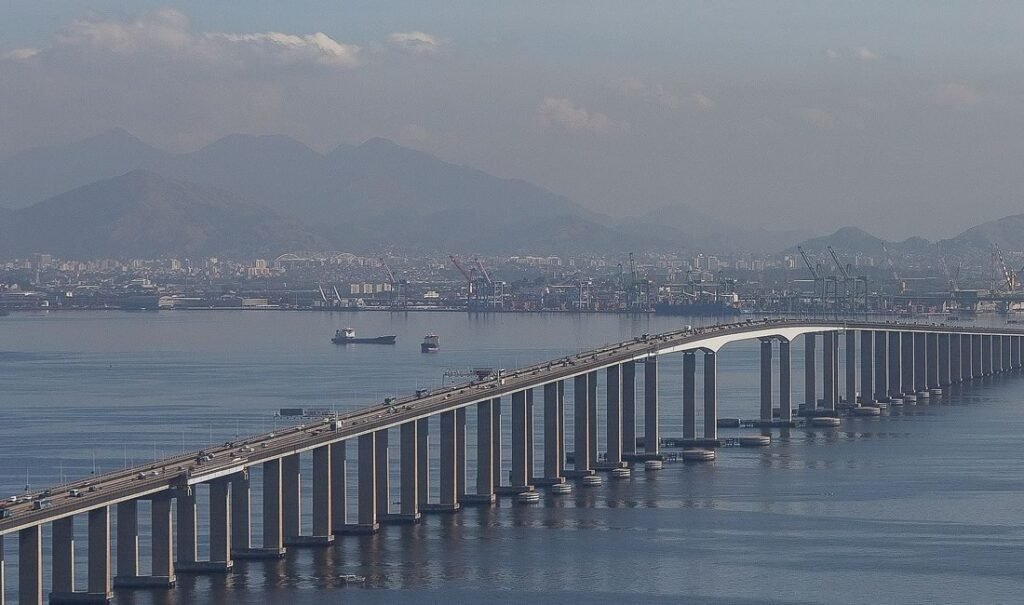
Yes! The Presidente Costa e Silva Bridge, as it was officially named, stretches an impressive 13.29 km (8.26 miles), with 8.8 km (5.5 miles) of that spanning the Guanabara Bay. Built between 1968 and 1974, it was essential in connecting Rio de Janeiro to the city of Niterói, eliminating the reliance on ferries.
To give you an idea of its grandeur, the bridge has a central span of 300 meters (984 feet) and reaches a height of 72 meters (236 feet), allowing massive ships to pass underneath. First-timers crossing the bridge are blown away by the view: on one side, Sugarloaf Mountain; on the other, the vast blue expanse of Guanabara Bay.
Structural Fun Facts About the Bridge
The Rio-Niterói Bridge is considered the longest prestressed concrete bridge in the Southern Hemisphere. During its construction, innovative engineering methods were used to ensure its durability and strength. The structure can be divided into three main parts: the superstructure (the deck and roadways), the mesostructure (crossbeams and pillars), and the infrastructure (foundations and capping blocks).
How Long Does It Take to Cross the Bridge?
It depends. On a calm day with no traffic, the 13 km (8 miles) journey can be done in about 15 minutes. But if you hit rush hour, especially in the morning (towards Rio) and in the afternoon (towards Niterói), that time can stretch to an hour or more!
If you’re not a fan of traffic, a great alternative is taking the ferries, which make the trip between the two cities in about 20 minutes. But let’s be honest: crossing the bridge has a special charm, especially if you want to soak in the views.
Is It Worth Crossing the Bridge Just for the Ride?
If you love panoramic views, absolutely! The scenery is incredible, especially at sunset. Plus, once you arrive in Niterói, you can check out famous attractions like the Museum of Contemporary Art (MAC), designed by Oscar Niemeyer — part of the Niemeyer Path, an architectural route along Niterói’s waterfront —, the beaches of Itacoatiara and Camboinhas, and the famous Parque da Cidade, which offers one of the most beautiful views of Rio de Janeiro.

Does the Rio-Niterói Bridge Have a Toll?
Yes, and this is one of the most common questions. The toll is only charged in the direction of Niterói. In other words, those leaving Rio de Janeiro pay to cross, but those coming from Niterói to Rio don’t pay a thing. The current price can be checked on the Ecoponte website, but as of today, a passenger vehicle pays R$ 6.20 (February 2025) to the concessionaire that manages the bridge.
If you’re on a bus, no worries—the toll is already included in your ticket price.
Can You Cross on Foot or by Bike?
Unfortunately, crossing the bridge on foot or by bike is not allowed. The vehicle traffic is too heavy, and there’s no infrastructure for pedestrians. But don’t worry, cyclists! If you want to enjoy a ride between Rio and Niterói on two wheels, you can take your bike on the ferries or even use the balsa ferry via Paquetá.
Alternatives to the Rio-Niterói Bridge
If you’d rather avoid the bridge traffic or just want a different option, there are other ways to get from Rio to Niterói and back:
- Ferries: The ferry ride between Praça XV (Rio) and downtown Niterói takes about 20 minutes and costs around R$ 7.70.
- Linha Vermelha + Ponte do Saber: For those heading to the Charitas area, this can be a less congested alternative.
- Rio-Magé Highway: Another option, but not very practical if you’re aiming for downtown Niterói.

Is the Rio-Niterói Bridge Safe?
Many people wonder about the bridge’s safety, especially regarding accidents and robberies. Structurally, you can rest easy: the bridge undergoes constant maintenance, and its engineering was designed to withstand strong winds and even earthquakes.
As for public safety, Ecoponte and the Federal Highway Police conduct regular patrols. Even so, it’s wise to avoid crossing the bridge during low-traffic hours, like the middle of the night.
Fun Facts You Probably Didn’t Know
Now that we’ve covered the basics, how about some fun facts to make your trip even more interesting?
- When it was inaugurated, the Rio-Niterói Bridge was the second-longest bridge in the world, second only to the Lake Pontchartrain Causeway in the US.
- Before the bridge, the trip between Rio and Niterói took over 2 hours by car, since you had to drive all the way around the Baixada Fluminense.
- During construction, the bridge earned the nickname “The Englishmen’s Bridge”, because many of the techniques used came from British engineering.
- The bridge’s official name honors former president Costa e Silva, but almost nobody calls it that.
- British inspiration: During its construction, standards used on the Severn Bridge, in the UK, were followed.
- Every day, around 150,000 vehicles cross the bridge.
Why the Rio-Niterói Bridge deserves a spot on your itinerary
The Rio-Niterói Bridge is so much more than a simple link between two cities. It’s a symbol of Brazilian engineering, a natural viewpoint, and an experience every traveler should have. Whether by car, bus, bike, or on foot, crossing the bridge is a one-of-a-kind chance to connect with the beauty of Rio de Janeiro and Niterói.
So, next time you’re in Rio, make sure to add the Rio-Niterói Bridge to your itinerary. Get your camera ready, pick the best time of day, and prepare for an experience you’ll remember (and have on your phone) forever. Safe travels!